Students who listen to this Grade 2 Core Knowledge History and Geography unit discover that Americans had a difficult task at hand after winning the Revolutionary War: they had to figure out a better way to govern themselves. Such leaders as James Madison, George Washington, Alexander Hamilton, and Benjamin Franklin traveled to Philadelphia to meet at the Constitutional Convention, with the goal of creating a new government. Students learn that the talks were held in secret in Independence Hall and that American leaders argued about many issues until they agreed to approve a new Constitution. They then hear that James Madison (whom we call the Father of the Constitution), along with John Jay and Alexander Hamilton, wrote the Federalist Papers to explain the document’s merits and to persuade the states to vote for it. Students find out that the states did finally approve the Constitution; that Madison wrote a Bill of Rights that was added to it; that the Constitution gives the American people the right to decide what the laws should be for our country; and that we can still amend it today.(5 lessons)
Dolley Madison Before James
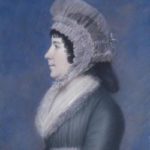
This short video explores the early life of Dolley Madison. Born into the Virginia gentry, Dolley spent her formative years in Philadelphia where she was married, widowed, and lost one of her children in the yellow fever epidemic of 1793. Professor Catherine Allgor describes James Madison as “smitten” with the 25 year-old widow and speculates why Dolley married James.
James Madison in the 1780s
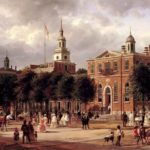
This short video explores the impact of James Madison’s experiences in both the Continental Congress and the Virginia House of Delegates in shaping his views of government. Madison understood the nature of collective deliberation and the Constitution reflects his interest in and understanding of the legislative process. Professor Jack Rakove examines Madison’s concerns about the “passions and interests” of both citizens and legislative bodies.
James Madison and the Constitution
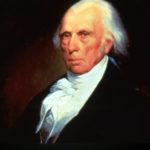
This video highlights James Madison’s talents both as a creative thinker as well as someone with practical experiences in governing. Madison was the longest-lived of the Founding generation and had years after ratification to think about what it takes to make a Constitution work. Professor Jack Rakove notes that Madison lived long enough to hear questions raised about the Constitution’s origins (we, the people? Or we, the states?) and to anticipate the dissolution of the union he created.
James Madison and the First Amendment
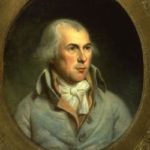
This short video traces the evolution of Madison’s attitude towards the religious liberty guarantees of the First Amendment. Initially opposed to a Bill of Rights as both inappropriate and dangerous, Madison’s views changed as a result of political and philosophical considerations. Professor Jeffry Morrison emphasizes Madison’s belief that religion should play a vital but informal role in the life of the republic.
James Madison and Religion
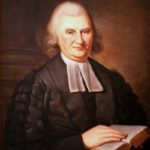
This short video reviews James Madison’s attitudes towards religion. Although he believed that religious belief was essential in a virtuous republic, he also was a religious libertarian for whom God alone was the “lord of conscience.” Professor Jeffry Morrison suggests that Madison’s Calvinist teachers (e.g., Dr. John Witherspoon) shaped his belief that government should be blind toward religion.
James Madison at the Constitutional Convention
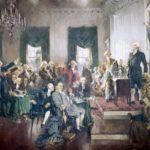
This video focuses on James Madison’s efforts to shape deliberation at the Constitutional Convention. His major goal was to replace the system of voluntary compliance of the states under the Article of Confederation with a system of law to compel compliance under the federal Constitution. Professor Jack Rakove explains Madison’s perspective that without such a system, the different interests within each state, coupled with diverse interests among the states, precluded effective governance.
James Madison and Proportional Representation

This short video highlights James Madison’s commitment to proportional representation in the newly-created Congress. However, he did not believe that the size of a state alone played an overly significant role in the decisions of either its citizens or its legislators. Professor Jack Rakove explains how Madison understood the various self-interests of all states and how he tried to account for this variation in crafting the new Constitution.
James Madison and the Bill of Rights
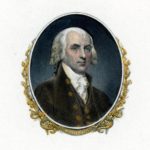
This short video traces the evolution of James Madison’s thinking about the necessity of a Bill of Rights. While originally opposed to both a bill of rights and conditional ratification, Madison came to appreciate the political and the practical efficacy of both. Professor Jack Rakove notes that, unlike many bills of rights which use the phrase “the government ought not”, the American Bill of Rights says “the government shall not”, thus creating a set of legal commands to limit government.
George Washington and James Madison
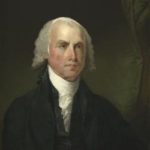
This short video tells the story of the “peculiar relationship” between George Washington and James Madison. Throughout their long years of collaboration, they were “intimate yet distant” in their common effort to create and sustain the American republic. Professor W. B. Allen emphasizes that, though their political differences ultimately led to estrangement, they remained united in their chief goal: making the Constitution work.