After just six years under the Articles of Confederation, a committee of anxious delegates agreed to meet in Philadelphia to amend the government. The country was in an economic crisis — citizens couldn’t pay their debts, the government couldn’t really collect taxes, and rebellions were cropping up in states across the nation. The existing government had the potential to drive the country to ruin. So fifty-five men gathered to determine the shape of the new United States.
The document that emerged after that summer of debate was littered with masterful planning, strange ideas and unsavory concessions. The delegates decided they’d be pleased if this new government lasted fifty years. It has been our blueprint for over two centuries now. This is the story of how our Constitution came to be.
This short episode includes a one-page Graphic Organizer for students to take notes on while listening, as well as discussion questions on the back side.
“Corner Stone” Speech
This speech was delivered in Savannah after Georgia and six other states had seceded from the Union but before hostilities had begun with the Confederate assault on Fort Sumter. Stephens lauded the Confederate states for rejecting the radical theories of Thomas Jefferson and the American founders and establishing instead, for the first time in history, a government resting upon the self-evident truth of racial inequality.
The United States Constitution (CKHG Unit)
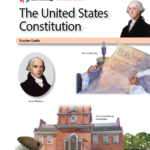
This unit explores the creation and central ideas of the United States Constitution. Across 18 lessons, students learn how, after the Revolution, the Founding Fathers worked to confront the shortcomings of the Articles of Confederation. They learn why the Bill of Rights was added to the Constitution, and explore reasons why the Constitution has survived as the guiding document of government in the United States.
Article VII: Ratification
After months of debate during the hot Philadelphia summer, on September 17, 1787, the Constitutional Convention finally adjourned and the new Constitution was signed, but it was not the law of the land yet. According to Article VII of the document, nine of 13 states would have to ratify (or approve) the new Constitution before it would officially replace the Articles of Confederation as our governing document.
James Madison at the Constitutional Convention
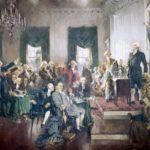
This video focuses on James Madison’s efforts to shape deliberation at the Constitutional Convention. His major goal was to replace the system of voluntary compliance of the states under the Article of Confederation with a system of law to compel compliance under the federal Constitution. Professor Jack Rakove explains Madison’s perspective that without such a system, the different interests within each state, coupled with diverse interests among the states, precluded effective governance.
Challenges to Ratification of the Constitution
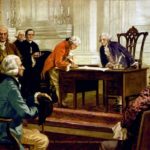
This video examines the need for and the challenges faced by the new Constitution. Delegates to the Constitutional Convention, originally an ad hoc gathering to revise the Articles of Confederation, quickly realized the need for a new political structure to strengthen the federal government. Professor John Kaminksi notes the role played by George Washington in legitimizing the Convention, as well as the significance of the decision to require ratification through conventions in 9/13 states.