While a famous committee of five drafted the Declaration of Independence, a far more unsung committee of thirteen wrote America’s first rulebook. The Articles of Confederation was our first constitution, and it lasted nine years. If you prefer Typee to Moby Dick, Blood Simple to A Serious Man, or Picasso’s Blue Period over Neoclassicism, you just might like the Articles of Confederation.
The fable of its weaknesses, strengths, rise, and downfall are told to us by Danielle Allen, Linda Monk, Joel Collins, and Lindsey Stevens.
This short episode includes a one-page Graphic Organizer for students to take notes on while listening, as well as discussion questions on the back side.
Founding Documents: The Constitution Podcast
After just six years under the Articles of Confederation, a committee of anxious delegates agreed to meet in Philadelphia to amend the government. The country was in an economic crisis — citizens couldn’t pay their debts, the government couldn’t really collect taxes, and rebellions were cropping up in states across the nation. The existing government had the potential to drive the country to ruin. So fifty-five men gathered to determine the shape of the new United States.
The document that emerged after that summer of debate was littered with masterful planning, strange ideas and unsavory concessions. The delegates decided they’d be pleased if this new government lasted fifty years. It has been our blueprint for over two centuries now. This is the story of how our Constitution came to be.
This short episode includes a one-page Graphic Organizer for students to take notes on while listening, as well as discussion questions on the back side.
Founding Documents
Discover the documents at the bedrock of our nation’s founding and understand the fundamental ideas from each of the documents, and the major principles of the U.S. Constitution. Primary sources include the Declaration of Independence, Articles of the Confederation, the Constitution and the Bill of Rights, Federalist papers (#51, #70, #78), Brutus #1, and the amazing Letter from the Birmingham City Jail. Check out the National Constitution Center’s learning module for more resources!
The Constitutional Convention
In the summer of 1787, delegates gathered for a convention in Philadelphia, with the goal of revising the Articles of Confederation, the nation’s existing governing document, which wasn’t really working. Instead, they wrote a whole new document, which created a revolutionary form of government: the U.S. Constitution. Read more about the summer of 1787 in the National Constitution Center’s learning module.
Article VII: Ratification
After months of debate during the hot Philadelphia summer, on September 17, 1787, the Constitutional Convention finally adjourned and the new Constitution was signed, but it was not the law of the land yet. According to Article VII of the document, nine of 13 states would have to ratify (or approve) the new Constitution before it would officially replace the Articles of Confederation as our governing document.
Drafting the Nation
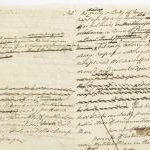
As the Framers drafted different versions of our founding documents, their ideas of what it meant to be a republic also changed. In this unit, four lessons based on the drafts of the Articles of Confederation, Declaration of Independence, and the Constitution, held at the collection at HSP, allow students to explore the language and ideas behind these pivotal documents
The Constitution: Counter Revolution or National Salvation
It is Fall 1787. The Federal Convention has recently concluded its closed door meetings in Philadelphia and presented the nation with a new model for the government. It is now up to each special state convention to decide whether to replace the Articles of Confederation with this new constitution. The debate is passionate and speaks directly to what the founding fathers had in mind in conceiving this new nation. Does this new government represent salvation or downfall?
Constitutional Convention
This article focuses on George Washington’s role in the Constitutional Convention in Philadelphia from May 14 to September 17. Delegates were gathering to correct the various problems that had arisen while the newly-independent nation was operating under the Articles of Confederation, but Washington had to be persuaded to even attend.
Challenges to Ratification of the Constitution
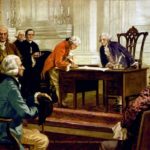
This video examines the need for and the challenges faced by the new Constitution. Delegates to the Constitutional Convention, originally an ad hoc gathering to revise the Articles of Confederation, quickly realized the need for a new political structure to strengthen the federal government. Professor John Kaminksi notes the role played by George Washington in legitimizing the Convention, as well as the significance of the decision to require ratification through conventions in 9/13 states.
Celebrating the U.S. Constitution
Students develop an understanding and appreciation of the importance of the U.S. Constitution. This lesson plan is a winner of the We the Future contest.