This activity is designed to help students understand the debates at the Constitutional Convention in 1787 that shaped America’s legislative branch of government. The primary goal is for students to discover how a compromise balanced the needs of large states and small states and how this led to the
creation of the current House of Representatives and Senate. In contrast to the real convention, this activity is simplified and focused to come to a conclusion in a class period.
The Seneca Falls Convention and the Declaration of Sentiments
The Seneca Falls Convention, held in Seneca Falls, New York, on July 19 to July 20, 1848, was the first women’s rights convention held in the United States. At that convention, the Declaration of Sentiments was written that outlined demands for women’s equality. This lesson uses video clips to have students understand the important people and events that led to the Declaration of Sentiments and then apply the text of the Declaration to today.
The Constitutional Convention
In the summer of 1787, delegates gathered for a convention in Philadelphia, with the goal of revising the Articles of Confederation, the nation’s existing governing document, which wasn’t really working. Instead, they wrote a whole new document, which created a revolutionary form of government: the U.S. Constitution. Read more about the summer of 1787 in the National Constitution Center’s learning module.
The Constitutional Convention
In this lesson, students will use C-SPAN video clips to examine the founding principles that emerged from the Constitutional Convention as well as hear about some of the people who participated. Students will use this information to analyze the role the compromise played in the creation of the Constitution.
Making the Constitution (CKHG Unit)
Students who listen to this Grade 2 Core Knowledge History and Geography unit discover that Americans had a difficult task at hand after winning the Revolutionary War: they had to figure out a better way to govern themselves. Such leaders as James Madison, George Washington, Alexander Hamilton, and Benjamin Franklin traveled to Philadelphia to meet at the Constitutional Convention, with the goal of creating a new government. Students learn that the talks were held in secret in Independence Hall and that American leaders argued about many issues until they agreed to approve a new Constitution. They then hear that James Madison (whom we call the Father of the Constitution), along with John Jay and Alexander Hamilton, wrote the Federalist Papers to explain the document’s merits and to persuade the states to vote for it. Students find out that the states did finally approve the Constitution; that Madison wrote a Bill of Rights that was added to it; that the Constitution gives the American people the right to decide what the laws should be for our country; and that we can still amend it today.(5 lessons)
Act IV: How Did the Constitutional Convention Conclude?

This short video analyzes the final days of the Convention, when the delegates were eager to leave but also mindful of the work they had accomplished. They were “smart people who had learned from spending 88 days together” and even those opposed to the Constitution (Randolph, Mason, and Gerry) had the opportunity to dissent. Professor Gordon Lloyd agrees with Franklin that the Constitution did not achieve perfection but, rather, created a “more perfect union.”
Act I: What Were the Various Plans at the Constitutional Convention?
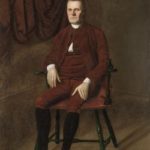
This short video highlights the four plans discussed during the first two weeks of the Convention: Madison’s Virginia Plan; Sherman’s New Jersey Plan; Hamilton’s “monarchical” plan; and, finally, Madison’s amended Virginia Plan. Each plan attempted to reconcile the potential conflicts between a strong national government and strong state governments. Professor Gordon Lloyd notes that an inability to compromise resulted in a stalemate after the first two weeks.
George Washington and the Constitutional Convention
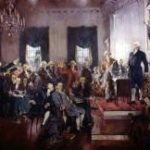
This short video discusses George Washington’s “infinite care in preparing the Constitution for posterity.” As Chair of the Constitutional Convention, Washington was most often silent, but he did cast a crucial vote in the Virginia delegation, resulting in the adoption of the Connecticut Compromise. Professor W. B. Allen emphasizes the role played by Washington in providing leadership and structure as the principles of the Constitution were argued and articulated.
Constitutional Convention
This article focuses on George Washington’s role in the Constitutional Convention in Philadelphia from May 14 to September 17. Delegates were gathering to correct the various problems that had arisen while the newly-independent nation was operating under the Articles of Confederation, but Washington had to be persuaded to even attend.
James Madison at the Constitutional Convention
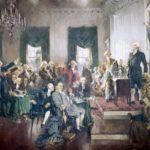
This video focuses on James Madison’s efforts to shape deliberation at the Constitutional Convention. His major goal was to replace the system of voluntary compliance of the states under the Article of Confederation with a system of law to compel compliance under the federal Constitution. Professor Jack Rakove explains Madison’s perspective that without such a system, the different interests within each state, coupled with diverse interests among the states, precluded effective governance.