This lesson looks at the historical context of women’s suffrage, tactics used in the movement and different perspectives of the suffrage movement. Students will view C-SPAN video clips to learn about the suffrage movement and evaluate the tactics used.
Evaluating the New Departure Strategy in the Fight for Women’s Suffrage
In this activity, students will evaluate the New Departure strategy of the women’s suffrage movement – the idea that the Constitution already guaranteed the right to vote for women, they just had to test it by voting – that was championed by the National Woman Suffrage Association. Students will analyze documents from Susan B. Anthony’s arrest and trial for voting in the 1872 election. They will answer questions as they work through the documents and evaluate the claim that the Fourteenth Amendment enfranchised women.
Women’s Suffrage and the 19th Amendment
This lesson looks at the historical context of women’s suffrage, tactics used in the movement, and different perspectives of the suffrage movement.
The 19th Amendment and the Road to Universal Suffrage
In this activity, students will explore the struggle for universal suffrage long after both men and women constitutionally had the right to vote. Following a progressive timeline, primary sources highlight voting problems that arose for minority groups throughout the 20th century. Students will answer questions as they work through the documents to reflect on if and when universal suffrage was ultimately achieved.
19th Amendment: Women’s Right to Vote
In this learning module, students will trace the roots of the women’s rights movement, from early reform efforts in the 1800s to the ultimate decision to pursue voting rights. This unit explores the constitutional arguments over women’s suffrage, the historical context of the fight for suffrage over 70 years, and the tactics suffragists used to persuade state legislatures and the national government to recognize voting rights for women.
Women’s Suffrage Primary Source Set
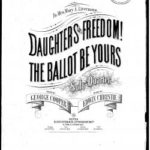
Sound files, sheet music, photographs, letters and maps help students better understand women’s suffrage. Includes teachers guide.
Suffrage Strategies: Voices for Votes
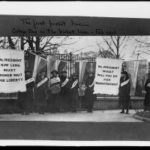
Students examine a variety of primary source documents related to the women’s suffrage movement. They identify different methods people used to influence and change attitudes and beliefs about suffrage for women. Students then create original documents encouraging citizens to vote in current elections.
Extending Suffrage to Women
In this activity, students will analyze documents pertaining to the woman suffrage movement as it intensified following passage of the 15th Amendment that guaranteed the right to vote for African American males. Documents were chosen to call attention to the struggle’s length, the movement’s techniques, and the variety of arguments for and against giving women the vote.
The Suffrage and the Civil Rights Reform Movements
This short comparative analysis activity involves comparing and contrasting two images of marches for freedom: a 1917 Bastille Day march for women’s suffrage, and the 1963 March on Washington for Jobs and Freedom. Students will consider the similarities and differences between these two images and hypothesize what major differences these photos might imply about the two social reform movements.
Extending Suffrage to Women
In this activity, students will analyze documents pertaining to the women’s suffrage movement as it intensified following passage of the 15th Amendment, which guaranteed the right to vote for African American males. Documents were chosen to call attention to the struggle’s length, the movement’s techniques, and the variety of arguments for and against giving women the vote.