The Cold War was sparked by the immediate aftermath of World War II. The Allied Forces were divided by ideology and quickly separated into two camps: the Western democracies, led by the United States, and the Communist nations, dominated by the Soviet Union. This alignment served as the basic framework of the Cold War over the next fifty years, from 1947-1991. As America positioned itself in opposition to totalitarian regimes, American citizens were forced to confront realities of what “freedom” meant, or should mean.
“Corner Stone” Speech
This speech was delivered in Savannah after Georgia and six other states had seceded from the Union but before hostilities had begun with the Confederate assault on Fort Sumter. Stephens lauded the Confederate states for rejecting the radical theories of Thomas Jefferson and the American founders and establishing instead, for the first time in history, a government resting upon the self-evident truth of racial inequality.
South Carolina Declaration of Causes of Secession

This is the primary source document, “Declaration of the immediate causes which induce and justify the secession of South Carolina from the Federal Union.” It details South Carolina’s decision to secede from the United States in 1860.
James Madison and the Constitution
In his essay “James Madison and the Constitution,” Professor Jack Rakove probes the mind of James Madison — the delegate known as the “architect of the Constitution,” explores the weaknesses of the Articles government, and develops arguments for a stronger union in a memorandum entitled Vices of the Political System of the United States. Free registration for students and teachers required to access resource.
The Acts of Congress
George Washington’s copy of the Acts passed at a Congress of the United States of America (New-York, 1789) contains key founding documents establishing the Union: the Constitution, the Bill of Rights, and a record of acts passed by the first Congress. In the margins, Washington wrote “President,” “Powers,” and “Required,” underscoring the responsibilities of the first Chief Executive. Learn more about this rare volume in the Fred W. Smith National Library for the Study of George Washington.
James Madison and the Constitution
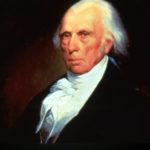
This video highlights James Madison’s talents both as a creative thinker as well as someone with practical experiences in governing. Madison was the longest-lived of the Founding generation and had years after ratification to think about what it takes to make a Constitution work. Professor Jack Rakove notes that Madison lived long enough to hear questions raised about the Constitution’s origins (we, the people? Or we, the states?) and to anticipate the dissolution of the union he created.