While the Reconstruction Amendments were an important step in ensuring equal rights for all people, regardless of race, racial injustices throughout the United States continued into the late 19th and 20th centuries, leading to the Civil Rights movement of the 1960s, and the passages of Supreme Court decisions and legislation, including Brown v. Board of Education, the Civil Rights Act of 1964, and the Voting Rights Act of 1965. Visit the National Constitution Center’s learning module to learn more about the freedom struggle and civil rights.
Rights in America
This DocsTeach page includes a variety of primary sources and teaching activities exploring the ways Americans, including African Americans and others, have fought for, attained, and protected their rights. Many documents at the National Archives illustrate how individuals and groups asserted their rights as Americans. Use this site to find teaching activities to explore the topics such as slavery, racism, citizenship, women’s independence, immigration, and more.
1968: The Poor People’s Campaign
1968 was a tumultuous period in the United States. The Vietnam War, political assassinations and civil rights issues were among some of the challenges the country faced as solutions were sought. At this time, Martin Luther King Jr. organized the Poor People’s Campaign to shift the focus of the civil rights movement to economic issues; however, Reverend King was assassinated weeks before the campaign got underway in Washington, D.C. In this lesson, students will learn about the circumstances that gave rise to this campaign and how it is relevant today.
James Madison and the Bill of Rights
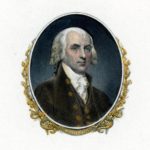
This short video traces the evolution of James Madison’s thinking about the necessity of a Bill of Rights. While originally opposed to both a bill of rights and conditional ratification, Madison came to appreciate the political and the practical efficacy of both. Professor Jack Rakove notes that, unlike many bills of rights which use the phrase “the government ought not”, the American Bill of Rights says “the government shall not”, thus creating a set of legal commands to limit government.
Black History Month Lesson Plans on Nonviolence
The power of nonviolent actions and attitudes as a means to resist oppression and spur reforms is a recurring feature of democratic and democratizing societies. The School Violence Prevention Demonstration Program presents educators with lesson plans that explore the use of nonviolence in history, paying particular attention to the civil rights movement and African American history. Six lessons address: the 1963 Children’s March; the concept of nonviolence using primary sources and stories of participants in the civil rights movement; the power of nonviolence; the story of Rosa Parks; citizenship schools; how music can be used to achieve social and political change.
Voting Rights in America Timeline
Supplement your students’ understanding of voting rights in the United States with this free downloadable timeline. This visual guide breaks down the history of voting rights across identities, and gives context to efforts to expand and limit voting access over time, through the lenses of our three branches of government and our federal system.
Women & the American Story: Growth and Turmoil, 1948-1976
This free curriculum unit from the New-York Historical Society explores the decades following World War II and considers the action that different groups took to advocate for their rights. Materials examine how shifting political and social ideologies impacted women’s lives and the roles women played in the wide array of activist-led movements that formed in the 1960s and 1970s.
African American Religious Leadership and the Civil Rights Movement
The modern Civil Rights Movement was the most important social protest movement of the twentieth century. People who were locked out of the formal political process due to racial barriers were able to mount numerous campaigns over three decades to eradicate racial injustice and in the process transform the nation. In its greatest accomplishment, the Civil Rights Movement successfully eliminated the American apartheid system popularly known as Jim Crow. Registration is required to view this resource. Free registration for students and teachers required to access resource.
Selective Incorporation
Teachers can use this lesson as a supplemental resource in their federalism unit, their Supreme Court unit, or their civil rights and civil liberties unit to help students understand how some rights apply to the states and others don’t. This lesson includes a video from Sal in which he describes the basic concept of selective incorporation, a video about McDonald v. Chicago in which Kim interviews Alan Gura and Elizabeth Wydra about the facts and outcome of the case, and practice questions aligned to the new AP Government and Politics exam.
Civil Rights in Pennsylvania
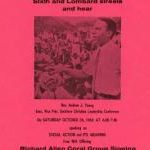
Throughout the twentieth century, blacks in Pennsylvania employed numerous strategies to achieve the civil rights they deserved. Their efforts for to receive their rights began with a strategy of New Deal liberalism in the 1940s and 50s headed by prominent black leaders. When attempts to rewrite the laws using the established political system failed, black leaders encouraged more direct action, like boycotts and sit-ins. The movement quickly took on a black nationalist approach. Philadelphia became the perfect place for several Black Power conferences and home of the short-lived, though active, Black Panther Party.