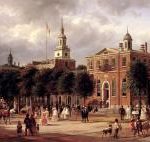
This short video explores the Connecticut Compromise, in which the delegates rejected an “either/or” solution to the question of representation and instead “thought out of the box,” creating a government that was partly national and partly federal. Professor Gordon Lloyd points out that although the final vote (5/4/1) on the Compromise did not reflect a bi-partisan consensus, it nevertheless was a significant breakthrough for moving on to other issues.
Landmark Lessons
Find lesson plans generated by teachers who completed the Cultures of Independence workshop at the Historical Society of Pennsylvania. The lessons illustrate how local and national history can be taught through a focus on a physical place and primary sources. Criteria for selecting lessons also included the teaching of historiography and, when appropriate, connections to the founding principles of the United States. Use a lesson from your region, or become inspired to create your own.
George Washington and the Constitutional Convention
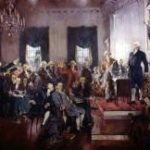
This short video discusses George Washington’s “infinite care in preparing the Constitution for posterity.” As Chair of the Constitutional Convention, Washington was most often silent, but he did cast a crucial vote in the Virginia delegation, resulting in the adoption of the Connecticut Compromise. Professor W. B. Allen emphasizes the role played by Washington in providing leadership and structure as the principles of the Constitution were argued and articulated.
Our Rights
The book Our Rights, written by David J. Bodenhamer, uses historical case studies to explore the rights in the Constitution. Supreme Court cases are used to demonstrate how a right received its modern interpretation, how the right applies today, and how courts and other interpreters seek to balance this right with important societal concerns such as public safety. The complete book or individual chapters can be downloaded.
The Pursuit of Justice
The Pursuit of Justice book, written by Kermit L. Hall and John J. Patrick, analyzes 30 Supreme Court cases chosen by a group of Supreme Court justices and leading civics educators as the most important for American citizens to understand. An additional 100 significant cases included in state history and civics standards are summarized. The complete book or individuals chapters can be downloaded.
The Bill of Rights: Debating the Amendments
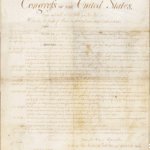
In this lesson, students will examine a copy of twelve possible amendments to the United States Constitution as originally sent to the states for their ratification in September of 1789. Students will debate and vote on which of these amendments they would ratify and compare their resulting “Bill of Rights” to the ten amendments ratified by ten states that have since been known by this name.
The Constitution: Counter Revolution or National Salvation
It is Fall 1787. The Federal Convention has recently concluded its closed door meetings in Philadelphia and presented the nation with a new model for the government. It is now up to each special state convention to decide whether to replace the Articles of Confederation with this new constitution. The debate is passionate and speaks directly to what the founding fathers had in mind in conceiving this new nation. Does this new government represent salvation or downfall?
The Constitution: Drafting a More Perfect Union
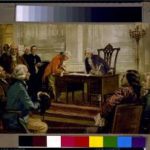
Students will analyze an unidentified historical document and draw conclusions about what this document was for, who created it, and why. After the document is identified as George Washington’s annotated copy of the Committee of Style’s draft constitution, students will compare its text to that of an earlier draft by the Committee of Detail to understand its evolution.
The Declaration of Independence: Created Equal?
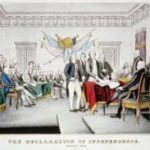
This lesson focuses on a few key concepts of the Declaration of Independence, beginning with the phrase “All men are created equal.” Students gain an appreciation of Thomas Jefferson’s efforts to deal with the complex issues of equality and slavery in the Declaration of Independence.
The Declaration of Independence: From Rough Draft to Proclamation
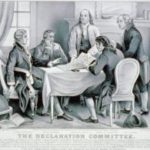
Students will analyze an unidentified historical document and draw conclusions about what this document was for, who created it, and why. After the document is identified as Thomas Jefferson’s “original Rough draught” of the Declaration of Independence, students will compare its text to that of the final document adopted by Congress on July 4, 1776 and discuss the significance of differences in wording.