This is the first of three revisits to the Declaration of Independence; three communities to which the tenets of life, liberty, and the pursuit of happiness did not apply. Byron Williams, author of The Radical Declaration, walks us through how enslaved Americans and Black Americans pushed against the document from the very beginning of our nation’s founding.
This short episode includes a one-page Graphic Organizer for students to take notes on while listening, as well as discussion questions on the back side.
Learn About Black History, Culture and Politics
Learn about Black history in the United States before and after the Civil War; the Civil Rights Movement; the history of Africa; African American art; and African American trailblazers.
Civil Rights in Pennsylvania
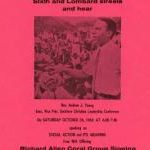
Throughout the twentieth century, blacks in Pennsylvania employed numerous strategies to achieve the civil rights they deserved. Their efforts for to receive their rights began with a strategy of New Deal liberalism in the 1940s and 50s headed by prominent black leaders. When attempts to rewrite the laws using the established political system failed, black leaders encouraged more direct action, like boycotts and sit-ins. The movement quickly took on a black nationalist approach. Philadelphia became the perfect place for several Black Power conferences and home of the short-lived, though active, Black Panther Party.
Jim Crow Wisdom: Memory and Identity in Black America Since 1940
James Basker & Johnathan Holloway discuss the novel written by Mr. Holloway, Jim Crow Wisdom: Memory & Identity in Black America Since 1940.
U.S. Supreme Court Decisions and Justices Who Made Them
“Who cares what old people in black robes say?” As an educator you care. The challenge is how do you get your students excited about Article III of the Constitution. Constituting America has organized 90 Supreme Court cases of influential and history-changing decisions in its Constitution Archives. Need a judicial decision on what you are studying? Find it here. Need a Supreme Court ruling on a current event? Find it here. You get the picture. The material you seek is here. Your challenge, should you accept it, is make it come alive to your students.
The Talented Tenth, W.E.B. DuBois

W.E.B Du Bois emphasizes the necessity for higher education in order to develop proper leadership capabilities among the most able 10% of black Americans. He often stressed the importance of educating his peers.
Black History Month Lesson Plans on Nonviolence
The power of nonviolent actions and attitudes as a means to resist oppression and spur reforms is a recurring feature of democratic and democratizing societies. The School Violence Prevention Demonstration Program presents educators with lesson plans that explore the use of nonviolence in history, paying particular attention to the civil rights movement and African American history. Six lessons address: the 1963 Children’s March; the concept of nonviolence using primary sources and stories of participants in the civil rights movement; the power of nonviolence; the story of Rosa Parks; citizenship schools; how music can be used to achieve social and political change.
Pathways to the Bench: African American History Month
Video profiles of seven African American federal judges, who overcame obstacles on their paths to the bench, are featured on the federal courts’ website. In their inspirational first-person narratives, they recount the challenges they faced growing up and offer uplifting insights. The four-minute videos are part of the federal courts’ Pathways to the Bench series.
Making a Change: The First Amendment and the Civil Rights Movement
Delve into hundreds of historical newspapers, videos, photographs and more to find out how the five freedoms empowered people fighting for change — and those fighting against it. Topics include: the history of the American civil rights movement, the relationship between the movement and the news media, the evolution and application of First Amendment freedoms, bias in the news, civic engagement and more.
Natural Rights, Citizenship Rights, State Rights, and Black Rights: Another Look at Lincoln and Race
In the real world, the ability of free blacks to enjoy their natural rights and exercise the privileges and immunities of citizenship depended on the states where they actually lived. When those states imposed a raft of legal discriminations on free blacks they cheapened the meaning of freedom and discounted the value of citizenship. I suspect this bothered Lincoln, but it wasn’t his issue. It would take other men and women, and another century of struggle, before “states rights” was abolished. Free registration for students and teachers required to access resource.