In a five-minute video, federal judges offer insights into their thinking about the separation of powers and describe how healthy tensions among the branches have a stabilizing effect on democracy. The judges also share their respect for and commitment to this founding principle, which has an impact on everyday American life.
Founding Documents: Federalist and Anti-Federalist Papers Podcast
Ten days after the Constitution was signed at the Old Philadelphia State House, an anonymous op-ed appeared in the New York Journal. Signed by “”Cato,” it cautioned readers of the new Constitution to take it with a grain of salt. Even the wisest of men, it warned, can make mistakes. This launched a public debate that would last months, pitting pro-Constitution Federalists against Constitution-wary Anti-Federalists. It was a battle for ratification, and it resulted in a glimpse into the minds of our Framers – and a concession that would come to define American identity.
Our guides through the minds of the Federalists and Anti-Federalists are Claire Griffin and Cheryl Cook-Kallio.
This short episode includes a one-page Graphic Organizer for students to take notes on while listening, as well as discussion questions on the back side.
Hamilton: An American Musical Resources

Alexander Hamilton, Founding Father and Broadway star, clashed with Thomas Jefferson politically and morally. But both figures were essential to the founding of the United States of America. Check out this page for resources on Jefferson, Hamilton, and other main players from the Broadway musical “Hamilton: An American Musical.”
United States Founding Documents
A gallery of study resources about significant primary source documents from American history. This gallery highlights resources designed to enhance study of a few significant primary source documents from American history.
Declaration Revisited: Black Americans Podcast
This is the first of three revisits to the Declaration of Independence; three communities to which the tenets of life, liberty, and the pursuit of happiness did not apply. Byron Williams, author of The Radical Declaration, walks us through how enslaved Americans and Black Americans pushed against the document from the very beginning of our nation’s founding.
This short episode includes a one-page Graphic Organizer for students to take notes on while listening, as well as discussion questions on the back side.
Celebrating the Founders
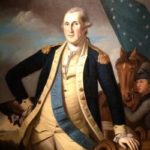
This short video explores why Americans celebrate the Founding generation. Americans point to a “founding moment” and, from the country’s earliest days, celebrated this “moment” on July 4. The first individuals to be honored were military leaders like George Washington; later, individuals who created the nation’s government were celebrated. Professor Daniel Dreisbach draws parallels between the commemoration of Washington as “Father” of the country and Moses as “Father” of the Hebrew nation.
Colonial Influences (Lesson Plan and Powerpoint)
American colonists had some strong ideas about what they wanted in a government. These ideas surface in colonial documents, and eventually became a part of the founding documents like the Declaration of Independence and Constitution. But where did they come from? This lesson looks at the Magna Carta, Mayflower Compact, English Bill of Rights, Cato’s Letters and Common Sense.
The Civil Rights Movement: Major Events and Legacies
James Patterson provides an overview of the movement, reminding us that the roots lay in the early twentieth century with the founding of the NAACP and the National Urban League and that efforts to secure equality continued through the 1940s and the postwar years. Patterson shows the variety of arenas in which the modern civil rights movement operated, from the courtrooms and legislative halls of the nation to the streets of Birmingham and the highways of Alabama and Mississippi. Free registration for students and teachers required to access resource.
Documents of Freedom: History, Government, and Economics Through Primary Sources
This complete online textbook covers American history, government, and economic concepts. Resources include readings for students, activity directions for teachers, and handouts that are downloadable and printable for classroom use. Content is geared toward students in grades 8-12. All materials are aligned with Common Core and individual state standards.
Amendment Worth A Thousand Words
With many pictures posted all over every social media platform, the #amendmentworthathousandwords’ overall mission will be to enlighten many of the rights promised to people by the Constitution. Through this challenge, many will become aware of their rights and what the Constitution does not only for them, but for all Americans as well! Lesson plan by Eboni Jenerette