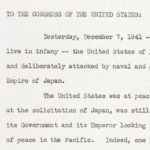
This lesson will explore the implementation of the war-making power from the first declared war under the Constitution—the War of 1812—to the Iraq War. Using primary sources, students will investigate how the constitutional powers to initiate war have been exercised by the legislative and executive branches at several key moments in American history. They will also evaluate why and how the balance of authority in initiating war has changed over time, and the current balance of power.
Core Documents Collection: The Cold War
This collection of documents on the Cold War continues TeachingAmericanHistory.org’s extended series of document collections covering major periods, themes and institutions in American history and government. The volume covers American aid to Europe in the early years of the Cold War and American intervention in subsequent years in conflicts around the world to contain the spread of Soviet power. Its documents also explore the dometic effects of the Cold War, chronicling how national security concerns affected relations between American citizens and between Americans and their government. Each volume includes:
Key documents on the period, theme or institution, selected by an expert and reviewed by an editorial board
A thematic table of contents, showing the connections between various documents
Study questions for each document as well as questions that refer to other documents in the collection
Notes on each document to identify people, events, movements, or ideas to improve understanding of the document’s historical context
Congress by the Numbers
Together, the U.S. House of Representatives and U.S Senate are called Congress, the legislative branch of the federal government. Congress has many powers including writing the nation’s laws, approving treaties, and declaring war.
Rights at Risk in Wartime
The terrorist attacks on Sept. 11, 2001, stunned the nation. As commander-in-chief, President George W. Bush responded quickly but soon all three branches of government would be embroiled in the struggle to balance national security with the protection of individual liberties amid a war on terror. This lesson plan is based on the Annenberg Classroom video “Habeas Corpus: The Guantanamo Cases.” The four cases are examples of how the Supreme Court, the president and Congress fought to balance national security and civil liberties during the war on terror. At the heart of each case was the constitutional right of habeas corpus, the right to have one’s detention or imprisonment reviewed in court.
Abraham Lincoln and Executive Power
This lesson traces the rise of Abraham Lincoln from his humble beginnings to the presidency. It examines Lincoln’s ideas and decisions regarding slavery and the use of presidential power to preserve the Union during the Civil War. After the lesson, students should be able to explain how Lincoln overcame daunting disadvantages to become a great president, analyze and evaluate his decisions in response the critical constitutional issues of the Civil War, and understand and appreciate his legacy to American constitutionalism and citizenship.
Starter Kit: Federalism Podcast
A tug of war, a balancing act, two dancers dragging each other across the floor. This is the perpetual ebb and flow of power between the states and the federal government. How can things be legal in a state but illegal nationally? Are states obstinate barricades to federal legislation? Or are they laboratories of democracy?
This short episode includes a one-page Graphic Organizer for students to take notes on while listening, as well as discussion questions on the back side.
Japanese American Internment

On February 19, 1942, President Franklin D. Roosevelt issued Executive Order 9066, which gave the military broad powers to ban any citizen from a coastal area stretching from Washington state to California and extending inland into southern Arizona. For the next four years, more than 120,000 persons of Japanese ancestry—77,000 of them American citizens—were removed from this area and incarcerated indefinitely without criminal charges or trial. Forty-six years and eight presidents later, on August 10, 1988, President Ronald Reagan signed the Civil Liberties Act of 1988 into law.
Constitution of the United States
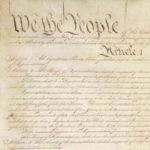
The original U.S. Constitution is on permanent display at the National Archives in Washington, DC. Drafted in 1787 after a hard-won victory in the War for Independence, this document codified the spirit of the Revolution into an ingenious practical scheme of government to promote the welfare of all its citizens.
Key Constitutional Concepts
This three-part documentary discusses why and how the Constitution was created at the Constitutional Convention and explores the protection of individuals’ rights in the Supreme Court case Gideon v. Wainwright and limits on presidential power through checks and balances in the Supreme Court case Youngstown v. Sawyer.
Each segment is about 20 minutes.
Closed captions available in multiple languages, including Spanish.
Korematsu and Civil Liberties
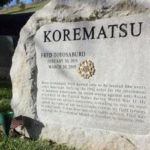
This documentary explores the landmark case Korematsu v. U.S. (1944) concerning the constitutionality of presidential executive order 9066 during World War II that gave the U.S. military the power to ban thousands of American citizens of Japanese ancestry from areas considered important to national security. A PDF lesson plan accompanies this video.