In this activity, students will evaluate the New Departure strategy of the women’s suffrage movement – the idea that the Constitution already guaranteed the right to vote for women, they just had to test it by voting – that was championed by the National Woman Suffrage Association. Students will analyze documents from Susan B. Anthony’s arrest and trial for voting in the 1872 election. They will answer questions as they work through the documents and evaluate the claim that the Fourteenth Amendment enfranchised women.
Choice Board – Conversations with Suffragists
On August 18, 1920, women won the right to vote with the ratification of the 19th Amendment. In this lesson, students will hear suffragists Susan B. Anthony, Sojourner Truth and Alice Paul, as portrayed by interpreters from the American Historical Theatre, talk about their experiences as activists.
The 19th Amendment: A Woman’s Right to Vote
Voting is the most basic right of a citizen and the most important right in a democracy. When you vote, you are choosing the people who will make the laws. For almost a century and a half of our nation’s history, women were barred from exercising this fundamental right. This film explores the long, difficult struggle for women to win the right to vote. It’s about citizenship, the power of the vote, and why women had to change the Constitution with the 19th Amendment. The film includes primary sources and commentary from historians, legal scholars, and Justices Ruth Bader Ginsburg and Anthony Kennedy.
Suffragists and Their Tactics
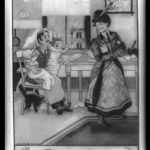
Students will work primarily with two American Memory Collections, Votes for Women – The Struggle for Women’s Suffrage and Votes for Women: 1848-1921, to understand how the suffragists of the early 20th century changed the requirements for voting in America.
Extending Suffrage to Women
In this activity, students will analyze documents pertaining to the woman suffrage movement as it intensified following passage of the 15th Amendment that guaranteed the right to vote for African American males. Documents were chosen to call attention to the struggle’s length, the movement’s techniques, and the variety of arguments for and against giving women the vote.
Extending Suffrage to Women
In this activity, students will analyze documents pertaining to the women’s suffrage movement as it intensified following passage of the 15th Amendment, which guaranteed the right to vote for African American males. Documents were chosen to call attention to the struggle’s length, the movement’s techniques, and the variety of arguments for and against giving women the vote.
Women, Their Rights and Nothing Less: The First Amendment and the Women’s Suffrage Movement
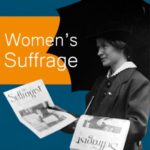
Use this map to explore how the women’s suffrage movement — and the people who opposed it — tried to influence public opinion. Explore artifacts from billboards and cards to buttons and cartoons. You’ll uncover the wide array of tools and tactics each side used to spread its message, and you’ll see how geography and other factors shaped the form and content of their communication.