A set of government and politics infographics that teachers can print out for their students, use for their exams, or use to create posters for their classroom.
Government Questioning Lesson
The objective of this lesson is to help students realize that the Constitution does affect them and have them come to the conclusion that they have to be an informed citizen and be careful of the sources they use to do the research.
The United States Constitution (CKHG Unit)
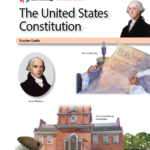
This unit explores the creation and central ideas of the United States Constitution. Across 18 lessons, students learn how, after the Revolution, the Founding Fathers worked to confront the shortcomings of the Articles of Confederation. They learn why the Bill of Rights was added to the Constitution, and explore reasons why the Constitution has survived as the guiding document of government in the United States.
1798: Sedition Act Reins in Newly Established Freedoms
Prominent Republican Party members immediately denounce the Act as a violation of First Amendment freedom of speech and of the press, but the Federal courts move forward with cases brought under the law. The still-new nation is drawn into a tense debate: To what extent should the government of a young nation limit criticism of its leaders and policies to protect its stability in the face of foreign threats?
How Revolutionary Was the American Revolution?
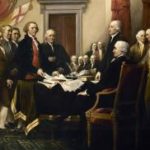
This short video asserts that although the American Revolution doesn’t fit the paradigm of other revolutions (e.g., British, French, Russian), it nevertheless resulted in a new form of republican government coupled with a new understanding of the role of citizens—both without turbulent social consequences. Professor Jack Rakove concludes that the hallmark of the American Revolution was the truly revolutionary idea that people could and should decide for themselves how to be governed.
Dolley Madison and Constitutional Thinking

This short video assesses the role played by Dolley Madison in promoting the experiment in republican government set in motion by the Constitution. She fully appreciated the 18th century idea of “manners”; i.e. how we treat each other is important. Professor Catherine Allgor contends that, when it came to manners, “women held the whole thing together” and Dolley’s contribution was invaluable as the young nation worked out constitutional precepts in practice.
Dolley Madison as First Lady
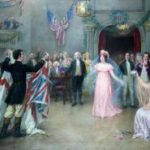
This short video emphasizes the importance of the unofficial sphere of the political world (the homes, social events, and private spaces where people gathered) and the role played by Dolley Madison in shaping this sphere. Professor Catherine Allgor concludes that Dolley, through this unofficial sphere, was the “queen” of influence peddling, using her status and connections to help staff the federal government.
Federalist No. 10

Federalist 10 is part of a remarkable public discussion between Federalists and Anti-federalists on the nature of republican government.