As they framed the Constitution, many of the Founding Fathers were wary of a powerful chief executive who might overshadow the legislative branch. By constructing the separation of powers within the federal government with a system of checks and balances, the Framers sought to limit the power of the president. Students will investigate not only the formal checks as laid out in the Constitution, but also explore the informal checks on presidential power that have emerged in the modern era. Free registration required to access lesson plan.
Election: The Road to the White House (Secondary)
During an election, civic energy reaches a fever pitch. The vote is one of the citizen’s most powerful tools, and advocating for a candidate, a set of ideas, or a platform is the right of every citizen. The President of the United States is often called the most powerful person in the world, so with every presidential election, the stakes are high. This unit is designed to teach students about presidential elections. It is not a collection of facts, diagrams, and explanations of processes. It is an interactive, project-based unit that invites the student to fully engage in the process of an election while also informing students about how elections work. It is our hope that this unit helps cultivate the sorts of informed and engaged citizens that are so essential to our democracy.
Presidential Signing Statements

Four short videos explain the significance of presidential signing statements: Separation of Powers, Non-Enforcement, the Unitary Theory and the President’s Intent. Hosted by Gwen Ifill, senior correspondent for The NewsHour with Jim Lehrer.
Executive Power in Times of Crisis
This lesson explores the use of executive power in times of crisis in relation to both the Constitution and the legislation of the time. Using exclusive primary source material from the National Archives at the Ronald Reagan Presidential Library, students will explore how President Lincoln, President Reagan, and President Obama utilized their executive power against the respective threats of their time.
Congress at Work: The Presidential Veto and Congressional Veto Override Process
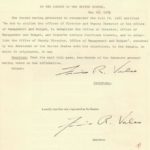
Students will use a facsimile of a vetoed bill and veto message to understand the veto and veto override process in Congress. Referring to the Constitution, students will match the Constitution’s directions to the markings and language of the bill and veto message. Students will then investigate motives for using the veto and override powers, and how the powers reflect the Constitution’s checks and balances.
The Appointment of Sandra Day O’Connor
The U.S. Constitution grants the President the power to appoint people to a variety of government positions. These appointments require careful thought and consideration since the people can have a great impact on the lives of many Americans during that President’s term. Some appointments need even greater thought and consideration, and those are to the federal judicial system and more importantly, to the Supreme Court of the United States. Justices of the Supreme Court (and other federal courts) serve lifetime appointments. Their rulings as they interpret the Constitution, and other situations as outlined in Article III of the Constitution, can have far-reaching effects for generations. With this awesome power to appoint comes an equally awesome responsibility to make sure that the individuals are the best people for the job. In this lesson, students will examine the appointment of Supreme Court Justice Sandra Day O’Connor, who was also the first female Justice. Students will examine the process by which a President makes the selection and the steps that lead to that person being confirmed by the Senate (or not).
Harnessing the Political Power of Words
Presidential candidates know that it’s not just what you say, but how you say it. Advisers and speechwriters shape their statements for maximum effect.
The Power of the Crowd
Political rallies: the scene of rousing speeches, cheering supporters and seas of signs and flags. These events are presidential campaign staples, but what do they offer the electorate?
Abraham Lincoln and Executive Power
This lesson traces the rise of Abraham Lincoln from his humble beginnings to the presidency. It examines Lincoln’s ideas and decisions regarding slavery and the use of presidential power to preserve the Union during the Civil War. After the lesson, students should be able to explain how Lincoln overcame daunting disadvantages to become a great president, analyze and evaluate his decisions in response the critical constitutional issues of the Civil War, and understand and appreciate his legacy to American constitutionalism and citizenship.
Key Constitutional Concepts
This three-part documentary discusses why and how the Constitution was created at the Constitutional Convention and explores the protection of individuals’ rights in the Supreme Court case Gideon v. Wainwright and limits on presidential power through checks and balances in the Supreme Court case Youngstown v. Sawyer.
Each segment is about 20 minutes.
Closed captions available in multiple languages, including Spanish.