From the colonial era, relations between European settlers and Native American nations have been complicated. In 1803 Congress authorized and funded an expedition led by Meriwether Lewis and William Clark for exploration of the region and for better knowledge about American Indians of the Northwest in order to develop trade. About 30 years later, the United States forced the removal of Native Americans from their lands to make way for white American settlement. Congress and the president made treaties with Native American nations, but those treaties were not always respected as the United States continued to expand into the west. After Native Americans enlisted and served in both World War I and World War II, Congress passed legislation to begin to address longstanding Native Americans claims against the United States Government.
Native American-European Contact in Colonial Times
Drawing on the concept of worldview, students learn to think critically about the cultural differences between Europeans and Native Americans, and how those differences shaped interaction and potential misunderstandings between the groups as they negotiated trade and diplomatic relationships.
Rights in America
This DocsTeach page includes a variety of primary sources and teaching activities exploring the ways Americans, including African Americans and others, have fought for, attained, and protected their rights. Many documents at the National Archives illustrate how individuals and groups asserted their rights as Americans. Use this site to find teaching activities to explore the topics such as slavery, racism, citizenship, women’s independence, immigration, and more.
Early Encounters Between Native Americans and Europeans
Students may come to recognize how the later period of continued exploration, settlement, and interaction was influenced by these early encounters from the St. Lawrence River to Georgia. Free registration for students and teachers required to access resource.
Declaration Revisited: Native Americans Podcast
Today is our second revisit to the document that made us a nation. Writer, activist, and Independent presidential candidate Mark Charles lays out the anti-Native American sentiments within it, the doctrines and proclamations from before 1776 that justified “discovery,” and the Supreme Court decisions that continue to cite them all.
This short episode includes a one-page Graphic Organizer for students to take notes on while listening, as well as discussion questions on the back side.
Native Americans: Cultures and Conflicts (CKHG Unit)
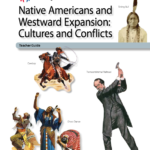
Across 7 lessons, this unit explores the ways of life of diverse Native American peoples and how their cultures were disrupted, displaced, and profoundly altered by westward expansion and American government policies and practices in the 1800s. Some of the content of this unit is tied to the “Pathway to Citizenship,” an array of civics-focused knowledge, questions, and activities.
Native American Housing
Native American housing is frequently assumed to be represented by one or two well-known styles such as the teepee or pueblo. While these do reflect distinct tribal designs, they are not all inclusive and students should be exposed to a wider range of design. The lesson should also help students understand the relationship between environment and housing. Free registration for students and teachers required to access resource.
Tribal Government
This lesson examines the varied structures and functions of tribal government as well as the relationship these nations have with the United States.
The Earliest Americans (CKHG Unit)
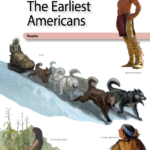
Across 17 lessons, this unit introduces some of the different peoples who populated America many years before the arrival of European explorers—some as early as thirty thousand years ago along the Pacific Coast, and others who traveled from Asia across Beringia, the land bridge. Students explore how these early peoples spread across North and South America, adapted to their environments and developed unique cultures. Each lesson is designed to last 30 minutes.
Westward Expansion Before the Civil War (CKHG Unit)
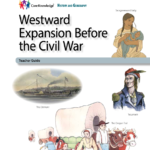
The unit explores the westward movement of Americans in the nineteenth century: the early explorers, effects of new developments in transportation, Native American resistance to settlers, and the treaties broken by government officials. Across 10 lessons, students explore the use of Manifest Destiny to promote the acquisition of US territory, the annexation of Texas, the Oregon Trail, and the California gold rush.