Students will learn about human trafficking in the United States and read a short profile of human trafficking survivors as they think about the human rights that are violated in this modern form of slavery.
Freedom of Speech
In this lesson, students analyze a photo of Robert Kennedy speaking outside the U.S. Department of Justice on June 14, 1963, and use it to discuss freedom of speech as a constitutional right in the United States, and human rights around the world.
The Rule of Law in Your Life
Rule of law is a principle under which all persons, institutions, and entities are accountable to laws that are: publicly promulgated, equally enforced, independently adjudicated, and consistent with international human rights principles. The Administrative Office of the U.S. Courts has created this resource to help your students understand rule of law with an overview of the topic; opening discussion questions; relevant landmark case summaries; and discussion questions to check for understanding. In a Court Shorts video, nine federal judges explain how fair and consistent adherence to the law protects our rights and well-being in everyday situations.
Habeas Corpus: The Guantanamo Cases
One of our oldest human rights, habeas corpus safeguards individual freedom by preventing unlawful or arbitrary imprisonment. This documentary examines habeas corpus and the separation of powers in the aftermath of the 9/11 attacks as the Supreme Court tried to strike a balance between the president’s duty to protect the nation and the constitutional protection of civil liberties in four major Guantanamo Bay cases: Hamdi v. Rumsfeld, Rasul v. Bush, Hamdan v. Rumsfeld and Boumediene v. Bush.
Closed captions available in English and Spanish.
Pathways to the Bench
U.S. District Court Judge Donovan Frank, of Minnesota, is featured in the latest installment of the Pathways to the Bench video series produced by the Administrative Office of the U.S. Courts to inspire and inform the public about the human face of the federal judiciary. In the series, individual judges talk about the personal, character-building challenges that have prepared them to serve on the bench. In this brief video, Judge Frank says that adversity has made him a better person and a better jurist.
Dept. of Health and Human Services v. Florida—The Health Care Case (2012)
Does the individual mandate of the Affordable Care Act exceed the constitutional power of the federal government to regulate commerce? This case summary shows how the Supreme Court answered that question in 2012.
Thomas Jefferson and Slavery
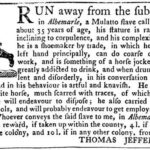
Thomas Jefferson, the man who wrote the famous line “all men are created equal,” was a life-long slave-owner. Over the course of his life, he would own 600 human beings, and at any given time there would be roughly 100 slaves living and working on and around Jefferson’s plantation and farms. This handout describes Thomas Jefferson’s views on slavery.
Letter to James Madison
This letter from Thomas Jefferson to James Madison in September, 1789 focuses on human rights and the principles of every government. The question: Whether one generation of men has a right to bind another, seems never to have been started either on this or our side of the water. Yet it is a question of such consequences as not only to merit decision, but place also, among the fundamental principles of every government. The course of reflection in which we are immersed here on the elementary principles of society has presented this question to my mind and that no such obligation can be transmitted I think very capable of proof.
Chevron v. Echazabal (2002)
Should the ADA require companies to hire people with disabilities even if their health is at risk in the workplace? This case summary shows how the Supreme Court answered that question in 2002.
HUD v. Rucker (2002)
Does HUD’s policy authorize a tenant to be evicted from public housing for the drug-related activity of a household member or guest? This case summary shows how the Supreme Court answered that question in 2002.