Get first steps for creating a respectful yet vibrant environment for students to explore diverse ideas on controversial topics, from politics to profanity, religion to racism. Four guidelines and a debate leader checklist provide a foundation for those seeking to steer productive conversations about controversial subjects.
Constitution of the United States
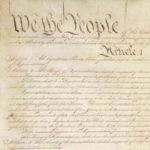
The original U.S. Constitution is on permanent display at the National Archives in Washington, DC. Drafted in 1787 after a hard-won victory in the War for Independence, this document codified the spirit of the Revolution into an ingenious practical scheme of government to promote the welfare of all its citizens.
Teaching Six Big Ideas in the Constitution
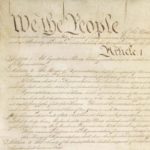
This lesson engages students in a study of the Constitution to learn the significance of “Six Big Ideas” contained in it. Students analyze the text of the Constitution in a variety of ways, examine primary sources to identify their relationship to its central ideas, and debate the core constitutional principles as they relate to today’s political issues. (Duration: 45-minute segments, up to 4.5 hours.)
Documents of Freedom: History, Government, and Economics Through Primary Sources
This complete online textbook covers American history, government, and economic concepts. Resources include readings for students, activity directions for teachers, and handouts that are downloadable and printable for classroom use. Content is geared toward students in grades 8-12. All materials are aligned with Common Core and individual state standards.
Making Civics Real
A multimedia workshop for high school civics teachers. It includes 8, 1-hour video programs, a print guide to the workshop activities, and a website. The goal of this workshop is to give teachers new resources and ideas to reinvigorate civic education. The series presents authentic teachers in diverse school settings modeling a variety of teaching techniques and best practices in a variety of social studies courses from a 9th-grade government/civics/econ course, to a 12th-grade law course
Early Presidents (CKHG Unit)
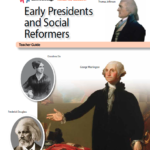
This unit (first half of Early Presidents and Social Reformers) focuses on the first seven presidents of the United States. Across 9 lessons, students learn about how the early presidents organized the federal government, built a national capital, directed a second war with Great Britain, more than doubled the size of the country, and formulated a “hands-off” foreign policy in the Western Hemisphere.
Negusie v. Holder (2009)
Can a foreign citizen who is denied asylum due to his involvement in the persecution of others on the basis of a protected ground argue that he was compelled to do so by his military superiors? This case summary shows how the Supreme Court answered that question in 2009.
Commemorating Presidents’ Day Resources
Teach your high school students about the constitutional legacy of George Washington, James Madison, Abraham Lincoln, and Ronald Reagan this Presidents’ Day. These free, ready-to-use lessons will engage your students in learning about these important presidents and how they shaped the history and Constitution of our nation. Each lesson was written and reviewed by scholars and contains questions to test student knowledge.
1798: Sedition Act Reins in Newly Established Freedoms
Prominent Republican Party members immediately denounce the Act as a violation of First Amendment freedom of speech and of the press, but the Federal courts move forward with cases brought under the law. The still-new nation is drawn into a tense debate: To what extent should the government of a young nation limit criticism of its leaders and policies to protect its stability in the face of foreign threats?