Why does the U.S. Constitution separate the government into three branches? At the nation’s founding, the Constitution’s framers understood that executive, legislative, and judicial responsibilities differed, and they provided for these distinct functions. They also believed that concentrating authority in one body would result in tyranny. They therefore divided the government into legislative, executive, and judicial branches, so that no single part would become too strong, and empowered each to limit or “check” the powers of the others. This exhibit examines Congress’s unique role and the ways in which it can balance or dynamically shape and challenge the powers of two other branches.
Executive Power in Times of Crisis
This lesson explores the use of executive power in times of crisis in relation to both the Constitution and the legislation of the time. Using exclusive primary source material from the National Archives at the Ronald Reagan Presidential Library, students will explore how President Lincoln, President Reagan, and President Obama utilized their executive power against the respective threats of their time.
Starter Kit: Executive Branch Podcast
In this episode of our Starter Kit series, a primer on the powers of the President, both constitutional and extra-constitutional. What can a president do? How long do a president’s actions reverberate? Why don’t we do treaties anymore?
Also, a super-inefficient mnemonic device to remember the 15 executive departments in the order of their creation.
This short episode includes a one-page Graphic Organizer for students to take notes on while listening, as well as discussion questions on the back side.
The Powers of the President
In this lesson, students will view video clips to learn about the powers of the president and how they have grown and been used throughout our history. Students will use these video clips to respond to a writing prompt about the balance of powers between the three branches.
Presidency on Trial: Assessing the Limits of Presidential Power
As they framed the Constitution, many of the Founding Fathers were wary of a powerful chief executive who might overshadow the legislative branch. By constructing the separation of powers within the federal government with a system of checks and balances, the Framers sought to limit the power of the president. Students will investigate not only the formal checks as laid out in the Constitution, but also explore the informal checks on presidential power that have emerged in the modern era. Free registration required to access lesson plan.
Federal Courts in History: United States v. Nixon
Dealing with the principle of separation of powers, this lesson focuses on the question of whether or not the Constitution’s separation of powers intended to create an absolute executive privilege.
Starter Kit: Checks and Balances Podcast
We exist in a delicate balance. Ours is a system designed to counterweight itself, to stave off the power grabs that entice even the fairest of us all. The U.S. government is comprised of humans, not angels, so each branch has the power to stop the other from going to far. The only catch being, of course, they have to actually exercise that power. In this episode, with the inimitable Kim Wehle as our guide, we learn what those checks actually are, and how the Executive, Legislative and Judicial branches (ostensibly) keep things democratic.
This short episode includes a one-page Graphic Organizer for students to take notes on while listening, as well as discussion questions on the back side.
Congress, the President, and the War Powers (Fundamental Principles of Government)
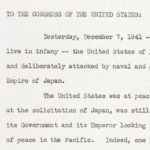
This lesson will explore the implementation of the war-making power from the first declared war under the Constitution—the War of 1812—to the Iraq War. Using primary sources, students will investigate how the constitutional powers to initiate war have been exercised by the legislative and executive branches at several key moments in American history. They will also evaluate why and how the balance of authority in initiating war has changed over time, and the current balance of power.
Congress at Work: The Presidential Veto and Congressional Veto Override Process
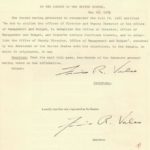
Students will use a facsimile of a vetoed bill and veto message to understand the veto and veto override process in Congress. Referring to the Constitution, students will match the Constitution’s directions to the markings and language of the bill and veto message. Students will then investigate motives for using the veto and override powers, and how the powers reflect the Constitution’s checks and balances.
Separation of Powers
Instead of placing authority in the hands of one person, like a king, or even a small group of people, the U.S. Constitution divides power. Power is first divided between the national, or federal government, and the state and local government under a system known as Federalism. At the federal level, the Constitution again divides power between the three major branches of our federal government: the legislative, the executive, and the judicial. Discover the battles of the branches in the National Constitution Center’s learning module.