This lesson explores the use of executive power in times of crisis in relation to both the Constitution and the legislation of the time. Using exclusive primary source material from the National Archives at the Ronald Reagan Presidential Library, students will explore how President Lincoln, President Reagan, and President Obama utilized their executive power against the respective threats of their time.
Congressional Power of Impeachment
In the Constitution, the Congress is given the sole power of impeachment and removing the President and all civil officers from office. This power of Legislative Branch provides a significant check over the Executive and Judicial Branches. This lesson provides explanations of the Constitutional basis of the power, the process for removing officials and the history of impeachments and removing these officials from office. It also provides discussions on the standards of impeachments and how those are interpreted by Congress.
Starter Kit: Checks and Balances Podcast
We exist in a delicate balance. Ours is a system designed to counterweight itself, to stave off the power grabs that entice even the fairest of us all. The U.S. government is comprised of humans, not angels, so each branch has the power to stop the other from going to far. The only catch being, of course, they have to actually exercise that power. In this episode, with the inimitable Kim Wehle as our guide, we learn what those checks actually are, and how the Executive, Legislative and Judicial branches (ostensibly) keep things democratic.
This short episode includes a one-page Graphic Organizer for students to take notes on while listening, as well as discussion questions on the back side.
Presidency on Trial: Assessing the Limits of Presidential Power
As they framed the Constitution, many of the Founding Fathers were wary of a powerful chief executive who might overshadow the legislative branch. By constructing the separation of powers within the federal government with a system of checks and balances, the Framers sought to limit the power of the president. Students will investigate not only the formal checks as laid out in the Constitution, but also explore the informal checks on presidential power that have emerged in the modern era. Free registration required to access lesson plan.
Separation of Powers
Instead of placing authority in the hands of one person, like a king, or even a small group of people, the U.S. Constitution divides power. Power is first divided between the national, or federal government, and the state and local government under a system known as Federalism. At the federal level, the Constitution again divides power between the three major branches of our federal government: the legislative, the executive, and the judicial. Discover the battles of the branches in the National Constitution Center’s learning module.
The Appointment of Sandra Day O’Connor
The U.S. Constitution grants the President the power to appoint people to a variety of government positions. These appointments require careful thought and consideration since the people can have a great impact on the lives of many Americans during that President’s term. Some appointments need even greater thought and consideration, and those are to the federal judicial system and more importantly, to the Supreme Court of the United States. Justices of the Supreme Court (and other federal courts) serve lifetime appointments. Their rulings as they interpret the Constitution, and other situations as outlined in Article III of the Constitution, can have far-reaching effects for generations. With this awesome power to appoint comes an equally awesome responsibility to make sure that the individuals are the best people for the job. In this lesson, students will examine the appointment of Supreme Court Justice Sandra Day O’Connor, who was also the first female Justice. Students will examine the process by which a President makes the selection and the steps that lead to that person being confirmed by the Senate (or not).
Starter Kit: Executive Branch Podcast
In this episode of our Starter Kit series, a primer on the powers of the President, both constitutional and extra-constitutional. What can a president do? How long do a president’s actions reverberate? Why don’t we do treaties anymore?
Also, a super-inefficient mnemonic device to remember the 15 executive departments in the order of their creation.
This short episode includes a one-page Graphic Organizer for students to take notes on while listening, as well as discussion questions on the back side.
Congress and the Separation of Powers – Virtual Exhibit
Why does the U.S. Constitution separate the government into three branches? At the nation’s founding, the Constitution’s framers understood that executive, legislative, and judicial responsibilities differed, and they provided for these distinct functions. They also believed that concentrating authority in one body would result in tyranny. They therefore divided the government into legislative, executive, and judicial branches, so that no single part would become too strong, and empowered each to limit or “check” the powers of the others. This exhibit examines Congress’s unique role and the ways in which it can balance or dynamically shape and challenge the powers of two other branches.
George Washington and the Presidency
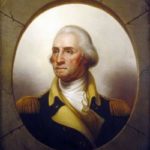
This short video highlights the crucial role played by George Washington in writing upon the “blank slate” of the Constitution. Washington was self-conscious about the importance of establishing principled precedents in his interpretation of Article II and what it said—or did not say—about the extent of executive power. According to Professor W. B. Allen, Washington was “conscious and deliberate” as he and his advisors gave meaning to the outline of the Constitution.
Commemorating Presidents’ Day Resources
Teach your high school students about the constitutional legacy of George Washington, James Madison, Abraham Lincoln, and Ronald Reagan this Presidents’ Day. These free, ready-to-use lessons will engage your students in learning about these important presidents and how they shaped the history and Constitution of our nation. Each lesson was written and reviewed by scholars and contains questions to test student knowledge.