
If the constitutional guarantee of a fair trial is to be realized, the process used for selecting jurors must also be fair. Before Edmonson v. Leesville Concrete Co., the constitutional principle of equal protection under the law had been applied to federal jury selection practices in criminal trials but not in civil trials. In this lesson, students learn about jury selection and how the role and responsibilities of government in civil and criminal jury trials are viewed by the Supreme Court.
The Right to Remain Silent: Miranda v. Arizona
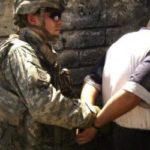
This documentary explores the landmark Supreme Court decision Miranda v. Arizona that said criminal suspects, at the time of their arrest but before any interrogation, must be told of their Fifth Amendment protection against self-incrimination and Sixth Amendment right to an attorney. The decision led to the familiar Miranda warning that begins “You have the right to remain silent…”
A Conversation on the Constitution: Jury Service

Justices Stephen G. Breyer, Sandra Day O’Connor and Anthony M. Kennedy discuss the history and responsibilities of juries and the role they play in the U.S. judicial system. This video complements FAQs: Juries, 11 short videos about the history of juries and what to expect as a potential juror.
Gideon v. Wainwright (1963) Middle School Level
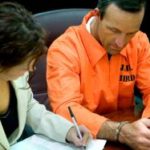
Does the Sixth Amendment’s right to counsel in criminal cases extend to defendants in state courts, even in cases in which the death penalty is not at issue? High school level also available.
This case summary provides teachers with everything they need to teach about Gideon v. Wainwright (1963). It contains background information in the form of summaries and important vocabulary at three different reading levels, as well a review of relevant legal concepts, diagram of how the case moved through the court system, and summary of the decision. This resource also includes nine classroom-ready activities that teach about the case using interactive methods.
Alabama v. Shelton (2002)
Does the Sixth Amendment right to appointed counsel apply to a defendant who was sentenced to a suspended sentence? This case summary shows how the Supreme Court answered that question in 2002.
Florida v. Powell (2010)
Does the failure to provide explicit advice of one’s right to have a lawyer present during questioning invalidate Miranda warnings? This case summary shows how the Supreme Court answered that question in 2010.
Your Right to Remain Silent: Miranda v. Arizona
In 1966, the Supreme Court’s 5-4 ruling in Miranda v. Arizona dramatically changed criminal procedures. The Court linked the Fifth Amendment’s privilege against self-incrimination to the Sixth Amendment’s guarantee of a right to counsel and applied both to protect a suspect’s rights from arrest through trial. This lesson plan is based on the Annenberg Classroom video “The Right to Remain Silent: Miranda v. Arizona.”
Japanese American Internment

On February 19, 1942, President Franklin D. Roosevelt issued Executive Order 9066, which gave the military broad powers to ban any citizen from a coastal area stretching from Washington state to California and extending inland into southern Arizona. For the next four years, more than 120,000 persons of Japanese ancestry—77,000 of them American citizens—were removed from this area and incarcerated indefinitely without criminal charges or trial. Forty-six years and eight presidents later, on August 10, 1988, President Ronald Reagan signed the Civil Liberties Act of 1988 into law.