Students who listen to this Grade 2 Core Knowledge History and Geography unit discover that Americans had a difficult task at hand after winning the Revolutionary War: they had to figure out a better way to govern themselves. Such leaders as James Madison, George Washington, Alexander Hamilton, and Benjamin Franklin traveled to Philadelphia to meet at the Constitutional Convention, with the goal of creating a new government. Students learn that the talks were held in secret in Independence Hall and that American leaders argued about many issues until they agreed to approve a new Constitution. They then hear that James Madison (whom we call the Father of the Constitution), along with John Jay and Alexander Hamilton, wrote the Federalist Papers to explain the document’s merits and to persuade the states to vote for it. Students find out that the states did finally approve the Constitution; that Madison wrote a Bill of Rights that was added to it; that the Constitution gives the American people the right to decide what the laws should be for our country; and that we can still amend it today.(5 lessons)
Judicial Independence: Essential, Limited, Controversial
In a constitutional system of government, the role of the judiciary is essential for maintaining the balance of power, protecting individual rights, upholding the rule of law, interpreting the Constitution, and ensuring equal justice for all. In this lesson, students learn about the role of an independent judiciary in the United States.
Freedom of Speech
In this lesson, students examine the historical context and the drafting of the First Amendment by examining the motivations of the founding generation. Students will also examine various types of “speech,” such as symbolic speech, hate speech, and political speech, to address the scope of protections promised by the First Amendment and learn that speech can only be limited when it is intended to and likely to cause imminent violence. In each instance, students will explore when the government has some authority to restrict speech; areas of consensus among scholars, judges, and citizens; the strongest constitutional arguments on each side of contested issues; and U.S. Supreme Court cases that have addressed free speech rights.
60-Second Civics Podcasts
60-Second Civics is a podcast that provides a quick and convenient way for listeners to learn about our nation’s government, the Constitution, and our history. The podcast explores themes related to civics and government, the constitutional issues behind the headlines, and the people and ideas that formed our nation’s history and government. The show’s content is primarily derived from the Center for Civic Education’s education for democracy curricula, including We the People: The Citizen and the Constitution, Foundations of Democracy, and Elements of Democracy. It’s easy to subscribe! Listen on iTunes or Stitcher or subscribe via RSS.
Act II: What Was the Connecticut Compromise at the Constitutional Convention?

This short video explores the Connecticut Compromise, in which the delegates rejected an “either/or” solution to the question of representation and instead “thought out of the box,” creating a government that was partly national and partly federal. Professor Gordon Lloyd points out that although the final vote (5/4/1) on the Compromise did not reflect a bi-partisan consensus, it nevertheless was a significant breakthrough for moving on to other issues.
The U.S. Constitution: Continuity and Change in the Governing of the United States
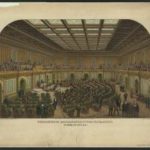
This unit examines continuity and change in the governing of the United States. Lessons one and two are focused on a study of the Constitution and Bill of Rights and provide access to primary source documents from the Library of Congress. Lesson three investigates important issues which confronted the first Congress and has students examine current congressional debate over similar issues. Lesson four features broadsides from the Continental Congress.
The Constitution: That Delicate Balance
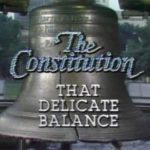
Constitutional issues come to life in this Emmy Award-winning series. Key political, legal, and media professionals engage in spontaneous and heated debates on controversial issues such as campaign spending, the right to die, school prayer, and immigration reform. This series will deepen understanding of the life and power of this enduring document and its impact on history and current affairs, while bringing biases and misconceptions to light.
Deliberation Materials: Gun Licensing
Should the federal government require licenses for gun owners and purchasers? This activity includes a deliberation reading and glossary, as well as accompanying handouts to give students additional information on the topic and to guide them through the deliberation process from planning to reflection. Deliberation teaches people how to discuss controversial issues by carefully considering multiple perspectives and searching for consensus. In preparation for deliberations, all participants read common, balanced background information on the issue. During the discourse, they offer arguments for each position on a contested public issue, first drawing from the text and then bringing in their own experiences.
Congress Investigates – Virtual Exhibit
The power to investigate, implied by the U.S. Constitution, is one of Congress’s most important tools for developing effective public policy, conducting oversight, and informing the public. Congress has investigated issues throughout its history via formal investigations and fact-finding inquiries with wide-ranging results, often significantly affecting the history of the United States.
Freedom of Religion: Establishment Clause
The First Amendment has two clauses related to religion: one preventing the government establishment of religion (the establishment clause) and the other protecting the ability to freely exercise religious beliefs (the free exercise clause). Students examine the First Amendment’s Establishment Clause: why it was included in the Bill of Rights, the issues it addresses, and how the Supreme Court has interpreted it over time.