We exist in a delicate balance. Ours is a system designed to counterweight itself, to stave off the power grabs that entice even the fairest of us all. The U.S. government is comprised of humans, not angels, so each branch has the power to stop the other from going to far. The only catch being, of course, they have to actually exercise that power. In this episode, with the inimitable Kim Wehle as our guide, we learn what those checks actually are, and how the Executive, Legislative and Judicial branches (ostensibly) keep things democratic.
This short episode includes a one-page Graphic Organizer for students to take notes on while listening, as well as discussion questions on the back side.
Congressional Power of Impeachment
In the Constitution, the Congress is given the sole power of impeachment and removing the President and all civil officers from office. This power of Legislative Branch provides a significant check over the Executive and Judicial Branches. This lesson provides explanations of the Constitutional basis of the power, the process for removing officials and the history of impeachments and removing these officials from office. It also provides discussions on the standards of impeachments and how those are interpreted by Congress.
Presidency on Trial: Assessing the Limits of Presidential Power
As they framed the Constitution, many of the Founding Fathers were wary of a powerful chief executive who might overshadow the legislative branch. By constructing the separation of powers within the federal government with a system of checks and balances, the Framers sought to limit the power of the president. Students will investigate not only the formal checks as laid out in the Constitution, but also explore the informal checks on presidential power that have emerged in the modern era. Free registration required to access lesson plan.
Judicial Independence: Essential, Limited, Controversial
In a constitutional system of government, the role of the judiciary is essential for maintaining the balance of power, protecting individual rights, upholding the rule of law, interpreting the Constitution, and ensuring equal justice for all. In this lesson, students learn about the role of an independent judiciary in the United States.
Congress, the President, and the War Powers (Fundamental Principles of Government)
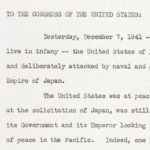
This lesson will explore the implementation of the war-making power from the first declared war under the Constitution—the War of 1812—to the Iraq War. Using primary sources, students will investigate how the constitutional powers to initiate war have been exercised by the legislative and executive branches at several key moments in American history. They will also evaluate why and how the balance of authority in initiating war has changed over time, and the current balance of power.
Congress and the Separation of Powers – Virtual Exhibit
Why does the U.S. Constitution separate the government into three branches? At the nation’s founding, the Constitution’s framers understood that executive, legislative, and judicial responsibilities differed, and they provided for these distinct functions. They also believed that concentrating authority in one body would result in tyranny. They therefore divided the government into legislative, executive, and judicial branches, so that no single part would become too strong, and empowered each to limit or “check” the powers of the others. This exhibit examines Congress’s unique role and the ways in which it can balance or dynamically shape and challenge the powers of two other branches.
Starter Kit: Federalism Podcast
A tug of war, a balancing act, two dancers dragging each other across the floor. This is the perpetual ebb and flow of power between the states and the federal government. How can things be legal in a state but illegal nationally? Are states obstinate barricades to federal legislation? Or are they laboratories of democracy?
This short episode includes a one-page Graphic Organizer for students to take notes on while listening, as well as discussion questions on the back side.
The Powers of the President
In this lesson, students will view video clips to learn about the powers of the president and how they have grown and been used throughout our history. Students will use these video clips to respond to a writing prompt about the balance of powers between the three branches.
Habeas Corpus: The Guantanamo Cases
One of our oldest human rights, habeas corpus safeguards individual freedom by preventing unlawful or arbitrary imprisonment. This documentary examines habeas corpus and the separation of powers in the aftermath of the 9/11 attacks as the Supreme Court tried to strike a balance between the president’s duty to protect the nation and the constitutional protection of civil liberties in four major Guantanamo Bay cases: Hamdi v. Rumsfeld, Rasul v. Bush, Hamdan v. Rumsfeld and Boumediene v. Bush.
Closed captions available in English and Spanish.
The Constitution: That Delicate Balance
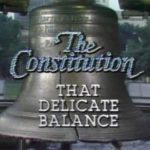
Constitutional issues come to life in this Emmy Award-winning series. Key political, legal, and media professionals engage in spontaneous and heated debates on controversial issues such as campaign spending, the right to die, school prayer, and immigration reform. This series will deepen understanding of the life and power of this enduring document and its impact on history and current affairs, while bringing biases and misconceptions to light.