In this lesson, students will learn about the individual rights that are included in the Bill of Rights and current issues relating to them. Students will use C-SPAN Classroom’s Constitution Clips to explore what each of these rights mean and determine how these rights apply to current events in America. This lesson works well with classes with one-to-one devices or in flipped classrooms.
Comparing the Magna Carta and English Bill of Rights with the U.S. Bill of Rights
In this activity students will examine the influences of the Magna Carta and the English Bill of Rights on the Bill of Rights in the U.S. Constitution. By the end of the activity students should be able to cite clear examples of the influence of English legal traditions in the U.S. Bill of Rights; they should also be able to give examples of how the American document is unique in offering even further expanded rights.
Natural Rights, Citizenship Rights, State Rights, and Black Rights: Another Look at Lincoln and Race
In the real world, the ability of free blacks to enjoy their natural rights and exercise the privileges and immunities of citizenship depended on the states where they actually lived. When those states imposed a raft of legal discriminations on free blacks they cheapened the meaning of freedom and discounted the value of citizenship. I suspect this bothered Lincoln, but it wasn’t his issue. It would take other men and women, and another century of struggle, before “states rights” was abolished. Free registration for students and teachers required to access resource.
Freedom Summer 1964
Freedom Summer is a digital learning tool (available on the web or as an app) for teachers and students that explores key events surrounding this time in America’s history and the impact of the civil rights movement on civil rights legislation. Players predict the outcomes of civil and congressional actions and discover how the events are intertwined. Students have the opportunity to view informative intro and outro videos and analyze 20 primary sources depicting images of civil rights events. Analysis of a variety of primary sources and supplemental information leads students to identify varying perspectives and potential outcomes. Freedom Summer is formatted for all types of computers and mobile devices, including Chromebooks, and can be found on the website or in any app store for download.
Bill of Rights Booklet – Elementary and Middle Schools
Want your students to have their own Bill of Rights booklet? This booklet has the verbiage from the Bill of Rights and a space for students to be able to paraphrase what each amendment means.
Do I Have a Right?: Bill of Rights Edition (Game and Teacher Guide)
In the Bill of Rights edition of Do I Have a Right? your students run a law firm that specializes in constitutional law, specifically the rights protected in the Bill of Rights. Clients bring various complaints, and students must identify if they “have a right.” As students successfully resolve cases by matching them with the correct attorneys, their law firm grows along with the skills of their lawyers.
Dialogue on the Fourteenth Amendment
The American Bar Association Dialogue program provides lawyers, judges and teachers with the resources they need to engage students and community members in a discussion of fundamental American legal principles and civic traditions. This Dialogue on the Fourteenth Amendment is composed of three parts:
Part 1: Equal Protection and Civil Rights – Participants discuss the equal protection clause of the 14th Amendment and consider how Congress, through federal legislation, has worked to help realize its constitutional promise.
Part 2: Incorporating the Bill of Rights examines the concept of incorporation. Using a case study of Gitlow v. New York, this section provides a guide to how courts have applied the Bill of Rights, selectively, to the states using the 14th Amendment.
Part 3: Ensuring Equality and Liberty explores how the 14th Amendment has been interpreted by courts to protect fundamental freedoms, including individuals’ right to marry.
19th Amendment: Women’s Right to Vote
In this learning module, students will trace the roots of the women’s rights movement, from early reform efforts in the 1800s to the ultimate decision to pursue voting rights. This unit explores the constitutional arguments over women’s suffrage, the historical context of the fight for suffrage over 70 years, and the tactics suffragists used to persuade state legislatures and the national government to recognize voting rights for women.
Congress and the Creation of the Bill of Rights
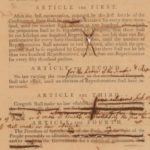
Students will explore the protections and limitations on authority contained in the Bill of Rights and the process by which the First Congress created it. They will do this by compiling a list of their rights as students, analyzing the Bill of Rights, and studying primary source documents to trace the origin and development of the first ten amendments. Students will then consider how the Bill of Rights might be updated to reflect 21st century circumstances. (Duration: 30–90-minute segments, up to 5 hours.)
Civil Rights: Identifying Community Issues

In this activity, students will investigate a contemporary civil rights issue to better understand the continuing legacy of the civil rights movement and the current impact of civil rights issues the movement did not address.