The Bill of Rights is the first 10 amendments to the U.S. Constitution. These amendments guarantee essential rights and civil liberties, such as the freedom of religion, the right to free speech, the right to bear arms, trial by jury, and more, as well as reserving rights to the people and the states. After the Constitutional Convention, the absence of a bill of rights emerged as a central part of the ratification debates. Anti-Federalists, who opposed ratification, pointed to the missing bill of rights as a fatal flaw. Several states ratified the Constitution on the condition that a bill of rights be promptly added. Pop over to the National Constitution Center’s learning module to discover more!
Civil Rights
While the Reconstruction Amendments were an important step in ensuring equal rights for all people, regardless of race, racial injustices throughout the United States continued into the late 19th and 20th centuries, leading to the Civil Rights movement of the 1960s, and the passages of Supreme Court decisions and legislation, including Brown v. Board of Education, the Civil Rights Act of 1964, and the Voting Rights Act of 1965. Visit the National Constitution Center’s learning module to learn more about the freedom struggle and civil rights.
Natural Rights, Citizenship Rights, State Rights, and Black Rights: Another Look at Lincoln and Race
In the real world, the ability of free blacks to enjoy their natural rights and exercise the privileges and immunities of citizenship depended on the states where they actually lived. When those states imposed a raft of legal discriminations on free blacks they cheapened the meaning of freedom and discounted the value of citizenship. I suspect this bothered Lincoln, but it wasn’t his issue. It would take other men and women, and another century of struggle, before “states rights” was abolished. Free registration for students and teachers required to access resource.
The Equal Rights Amendment (ERA)
The Equal Rights Amendment (ERA) stated, “Equality of Rights under the law shall not be denied or abridged by the United States or any state on account of sex.” This proposed amendment was passed by Congress in 1972 but failed to be ratified by three-fourths of the states. This lesson provides an overview of the proposed amendment, arguments for and against ratification and possible future steps toward ratification. This lesson can be used in a traditional or flipped classroom.
Expansion of Voting Rights
This lesson provides students with a brief overview of the historical evolution and expansion of voting rights in the United States. Students will discuss examples of previous “voting qualifications” used by states in the past to deny minorities the right to vote. They will reflect on why the right to vote is important, and appreciate the outcomes of constitutional amendments, Supreme Court decisions, and the Voting Rights Act in the expansion of this right.
Dialogue on the Fourteenth Amendment
The American Bar Association Dialogue program provides lawyers, judges and teachers with the resources they need to engage students and community members in a discussion of fundamental American legal principles and civic traditions. This Dialogue on the Fourteenth Amendment is composed of three parts:
Part 1: Equal Protection and Civil Rights – Participants discuss the equal protection clause of the 14th Amendment and consider how Congress, through federal legislation, has worked to help realize its constitutional promise.
Part 2: Incorporating the Bill of Rights examines the concept of incorporation. Using a case study of Gitlow v. New York, this section provides a guide to how courts have applied the Bill of Rights, selectively, to the states using the 14th Amendment.
Part 3: Ensuring Equality and Liberty explores how the 14th Amendment has been interpreted by courts to protect fundamental freedoms, including individuals’ right to marry.
Voting Rights in America Timeline
Supplement your students’ understanding of voting rights in the United States with this free downloadable timeline. This visual guide breaks down the history of voting rights across identities, and gives context to efforts to expand and limit voting access over time, through the lenses of our three branches of government and our federal system.
Bill of Rights
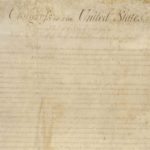
The Bill of Rights is on permanent display at the National Archives in Washington, DC. This original joint resolution of Congress proposed 12 amendments to the United States Constitution, but only 10 were ratified. Added to the Constitution in 1791 as the first 10 amendments, the Bill of Rights explicitly protected freedom of speech, of the press, of religion, and of assembly, among many other rights.
Selective Incorporation
Teachers can use this lesson as a supplemental resource in their federalism unit, their Supreme Court unit, or their civil rights and civil liberties unit to help students understand how some rights apply to the states and others don’t. This lesson includes a video from Sal in which he describes the basic concept of selective incorporation, a video about McDonald v. Chicago in which Kim interviews Alan Gura and Elizabeth Wydra about the facts and outcome of the case, and practice questions aligned to the new AP Government and Politics exam.
1968: The Poor People’s Campaign
1968 was a tumultuous period in the United States. The Vietnam War, political assassinations and civil rights issues were among some of the challenges the country faced as solutions were sought. At this time, Martin Luther King Jr. organized the Poor People’s Campaign to shift the focus of the civil rights movement to economic issues; however, Reverend King was assassinated weeks before the campaign got underway in Washington, D.C. In this lesson, students will learn about the circumstances that gave rise to this campaign and how it is relevant today.