In 1966, the Supreme Court’s 5-4 ruling in Miranda v. Arizona dramatically changed criminal procedures. The Court linked the Fifth Amendment’s privilege against self-incrimination to the Sixth Amendment’s guarantee of a right to counsel and applied both to protect a suspect’s rights from arrest through trial. This lesson plan is based on the Annenberg Classroom video “The Right to Remain Silent: Miranda v. Arizona.”
The Right to Remain Silent: Miranda v. Arizona

This documentary explores the landmark Supreme Court decision Miranda v. Arizona that said criminal suspects, at the time of their arrest but before any interrogation, must be told of their Fifth Amendment protection against self-incrimination and Sixth Amendment right to an attorney. The decision led to the familiar Miranda warning that begins “You have the right to remain silent…”
Miranda v. Arizona (1966)

This case summary provides teachers with everything they need to teach about Miranda v. Arizona (1966). It contains background information in the form of summaries and important vocabulary at three different reading levels, as well a review of relevant legal concepts, diagram of how the case moved through the court system, and summary of the decision. This resource also includes ten classroom-ready activities that teach about the case using interactive methods.
Chavez v. Martinez (2003)
Is a suspect’s right against self-incrimination and to due process violated if he is subjected to coercive questioning while in custody, even if his statements were never used against him? This case summary shows how the Supreme Court answered that question in 2003.
Hiibel v. Nevada (2004)
Does a state law that imposes criminal penalties for those who refuse to identify themselves violate the Fourth Amendment and/or Fifth Amendment? This case summary shows how the Supreme Court answered that question in 2004.
Defining Classroom Citizenship
The founders understood that, in order to preserve their liberty and happiness, and that of future generations, the foundation of successful self-government was citizens who understood and applied certain virtues. They constructed the U.S. Constitution according to their study of the principles and virtues that were most necessary to sustain a free, prosperous, and orderly society. This lesson is ideal for the first day of school.
Florida v. Powell (2010)
Does the failure to provide explicit advice of one’s right to have a lawyer present during questioning invalidate Miranda warnings? This case summary shows how the Supreme Court answered that question in 2010.
Learning about the Preamble to the U.S. Constitution
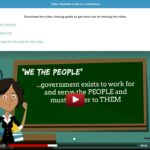
This resource provides students with an English language video and associated student friendly readings (in English, Spanish, and Haitian Creole), as well as reading and video guides and self assessment tools. Using these, students will explore the meaning and importance of the Preamble.
Free registration is required to use the resource.
How Do We the People Influence and Monitor the Government?
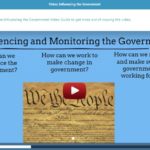
This resource provides students with an English language video and associated student friendly readings (in English, Spanish, and Haitian Creole), as well as reading and video guides and self assessment tools. Using these, students will consider the different ways that citizens, interest groups, and the media can influence and monitor government.
Free registration is required to use the resource.
The Road to Independence
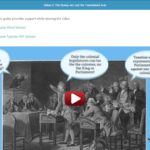
This resource provides students with an English language video and associated student friendly readings (in English, Spanish, and Haitian Creole), as well as reading and video guides and self assessment tools. Using these, students will explore the road to independence and key events along the path to the Declaration of Independence!
Free registration is required to use the resource.