Why does the U.S. Constitution separate the government into three branches? At the nation’s founding, the Constitution’s framers understood that executive, legislative, and judicial responsibilities differed, and they provided for these distinct functions. They also believed that concentrating authority in one body would result in tyranny. They therefore divided the government into legislative, executive, and judicial branches, so that no single part would become too strong, and empowered each to limit or “check” the powers of the others. This exhibit examines Congress’s unique role and the ways in which it can balance or dynamically shape and challenge the powers of two other branches.
Judicial Independence: Essential, Limited, Controversial
In a constitutional system of government, the role of the judiciary is essential for maintaining the balance of power, protecting individual rights, upholding the rule of law, interpreting the Constitution, and ensuring equal justice for all. In this lesson, students learn about the role of an independent judiciary in the United States.
Our American Government
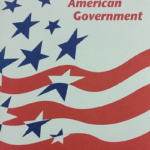
Our American Government is a popular introductory guide for American citizens and those of other countries who seek a greater understanding of our heritage of democracy. The question-and-answer format covers a broad range of topics dealing with the legislative, executive, and judicial branches of our Government as well as the electoral process and the role of political parties. (House Document 108-94)
Connecting the Separate Powers
In this lesson, students will gain an understanding of the separation of powers using role playing and discussion. Students will identify which parts of the Constitution provide for the branches of our government, and will categorize public officials into one of these three branches.
The Amendment Process: Ratifying the 19th Amendment
In this activity, students will analyze historical records of Congress and the U.S. government to understand the sequence of steps in the amendment process. Students will study each document and match it to the step in the process that it illustrates.
When put in proper sequence, the documents will show the process by which the 19th Amendment – prohibiting the federal government or states from denying the right to vote on the basis of sex – was added to the Constitution.
Then students will reflect on the process, and the roles that the people, president, Congress and the states play.
Congress and the Creation of the Bill of Rights
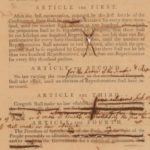
Students will explore the protections and limitations on authority contained in the Bill of Rights and the process by which the First Congress created it. They will do this by compiling a list of their rights as students, analyzing the Bill of Rights, and studying primary source documents to trace the origin and development of the first ten amendments. Students will then consider how the Bill of Rights might be updated to reflect 21st century circumstances. (Duration: 30–90-minute segments, up to 5 hours.)
Documents of Freedom: History, Government, and Economics Through Primary Sources
This complete online textbook covers American history, government, and economic concepts. Resources include readings for students, activity directions for teachers, and handouts that are downloadable and printable for classroom use. Content is geared toward students in grades 8-12. All materials are aligned with Common Core and individual state standards.
The Constitutional Convention
In this lesson, students will use C-SPAN video clips to examine the founding principles that emerged from the Constitutional Convention as well as hear about some of the people who participated. Students will use this information to analyze the role the compromise played in the creation of the Constitution.
George Washington and the Founding of the U.S. Government
The founding of the United States government is intimately intertwined with George Washington’s own biography. This web page offers resources for teachers to use in their classrooms associated with Washington’s role in the creation of the government. Included are primary and secondary sources, as well as essential questions for teaching the founding, lesson plans and classroom ready activities.
Bring the Constitution to Life!
Locate primary sources from the holdings of the National Archives related to such topics as “checks and balances,” “representative government,” all 27 amendments, and other concepts found in the Constitution. This special home page devoted to the U.S. Constitution also features activities to share with students, such as “The Constitution at Work,” which uses primary sources to demonstrate the Constitution in action in our everyday lives.