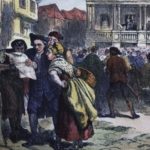
This short video highlights the importance of popular sovereignty in the ratification debates. The people themselves, through their elected delegates in specially-called conventions, voted up or down on the new Constitution. Professor John Kaminksi notes how the Antifederalists also used the principle of popular sovereignty to justify their call for constitutional amendments.
Foundations of Democracy
What are the three foundations of American democracy and how do they work together? Explore the National Constitution Center’s Foundations of Democracy learning module to uncover the connections between popular sovereignty, natural rights, and rule of law.
The Electoral College
Today, the American people vote for president and vice president on Election Day. But, technically speaking, these votes don’t directly determine the outcome of the election. These popular votes determine which electors will be appointed to the Electoral College, which is made up of 538 electors drawn from the states and the District of Columbia. Each state is granted a different number of electoral votes based on the size of its congressional delegation. The electors meet after the general election to cast their votes for president and vice president.
The Great Awakening
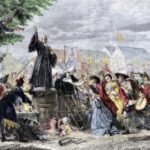
This short video examines the flurry of religious expression which spread throughout the colonies during the 1740’s and 1750’s. Led by individuals such as George Whitfield and Jonathan Edwards, the Great Awakening cut across racial, class, and geographic barriers to create an incipient sense of nationalism. Professor Jeffry Morrison contends that the popular religiosity of this movement contributed directly to the popular constitutionalism of the 1770’s.
Government Questioning Lesson
The objective of this lesson is to help students realize that the Constitution does affect them and have them come to the conclusion that they have to be an informed citizen and be careful of the sources they use to do the research.
Should the Electoral College Be Reformed?
This deliberation has students view C-SPAN video clips to learn about the history and Constitutional background of the Electoral College. Students will also explore arguments for and against reforming the Electoral College. Using this information, students will develop and argue their position on the question: Should the Electoral College Be Reformed?
Our American Government
Our American Government is a popular introductory guide for American citizens and those of other countries who seek a greater understanding of our heritage of democracy. The question-and-answer format covers a broad range of topics dealing with the legislative, executive, and judicial branches of our Government as well as the electoral process and the role of political parties. (House Document 108-94)
Understanding Democracy: A Hip Pocket Guide
This guide, written by John J. Patrick, explains the core concepts of democracy in a clear A-Z format. The complete book is available for download.
Teaching Six Big Ideas in the Constitution
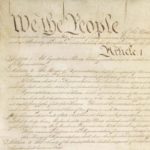
This lesson engages students in a study of the Constitution to learn the significance of “Six Big Ideas” contained in it. Students analyze the text of the Constitution in a variety of ways, examine primary sources to identify their relationship to its central ideas, and debate the core constitutional principles as they relate to today’s political issues. (Duration: 45-minute segments, up to 4.5 hours.)