Here’s a fun activity for all ages with vocabulary that is tied to Constitution Day! Answers are provided as well!
Constitution Day Writing Prompts – Middle and High School
Three writing prompts for Constitution Day are provided for middle school and high school. The prompts can be used as a formal essay, at writing stations, or as a “discuss and write.”
The Electoral College Process
In this activity, students will learn the steps in the Electoral College process, from Election Day to Inauguration Day. They will analyze historical primary sources from various Presidential elections, each representing a different step in the process, and arrange them in the correct sequence.
Constitution Day Writing Prompts – K-3
September 17 is Constitution Day! We have created different writing prompts along with the writing space for students. These writing prompts can be used as individual assignments, at writing stations, or even for group discussions!
The Earliest Americans (CKHG Unit)
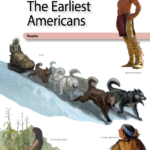
Across 17 lessons, this unit introduces some of the different peoples who populated America many years before the arrival of European explorers—some as early as thirty thousand years ago along the Pacific Coast, and others who traveled from Asia across Beringia, the land bridge. Students explore how these early peoples spread across North and South America, adapted to their environments and developed unique cultures. Each lesson is designed to last 30 minutes.
Native Americans: Cultures and Conflicts (CKHG Unit)
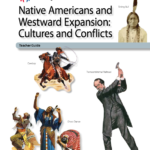
Across 7 lessons, this unit explores the ways of life of diverse Native American peoples and how their cultures were disrupted, displaced, and profoundly altered by westward expansion and American government policies and practices in the 1800s. Some of the content of this unit is tied to the “Pathway to Citizenship,” an array of civics-focused knowledge, questions, and activities.
The Age of Exploration (CKHG Unit)
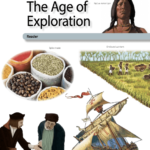
This unit introduces students to European exploration and trade from 1400 to the 1600s. Across 12 lessons, students learn about motivations for European exploration and study specific explorers, learning about their encounters with indigenous peoples. Students are introduced to the early slave trade and the beginnings of slavery in the Americas.
Earth Day Activities
You will find a suite of activities for families, teens and educators to celebrate Earth Day. Take on a Green Challenge to design a creative solution for an environmental issue, explore examples of climate activism, and learn how legislators consider a climate-ready policy issue.
Weights and Measures
In this lesson, students will come to understand why having common weights and measures, imposed and enforced by the government, is important in day-to-day life. They will discuss how weights and measures permeate the sciences, industry, and commerce, discovering the importance of such standards in their own lives. In the process, students will identify concepts underlying the need for weights and measures, such as private property and fair treatment under the law.
The Appointment of Sandra Day O’Connor
The U.S. Constitution grants the President the power to appoint people to a variety of government positions. These appointments require careful thought and consideration since the people can have a great impact on the lives of many Americans during that President’s term. Some appointments need even greater thought and consideration, and those are to the federal judicial system and more importantly, to the Supreme Court of the United States. Justices of the Supreme Court (and other federal courts) serve lifetime appointments. Their rulings as they interpret the Constitution, and other situations as outlined in Article III of the Constitution, can have far-reaching effects for generations. With this awesome power to appoint comes an equally awesome responsibility to make sure that the individuals are the best people for the job. In this lesson, students will examine the appointment of Supreme Court Justice Sandra Day O’Connor, who was also the first female Justice. Students will examine the process by which a President makes the selection and the steps that lead to that person being confirmed by the Senate (or not).