Reservation Controversies covers historic issues dealing with American Indian Reservations in the 1870s. This experience uses problem based learning (PBL), in which the student is confronted or faced with a real world problem which has no preconceived right or wrong answers. This scenario puts the student as prospective Indian Agent for the Comanche Indian reservation in 1873. Using various teaching/learning strategies, which include brainstorming, role playing, and oral presentations, the students access primary sources and other background sources to arrive at a recommendation, based on the information. The teacher, librarian, and other support staff act as guides or advisors through most of the process.
Indian Boarding Schools Primary Source Set
Through photographs, letters, reports, interviews, and other primary documents, students explore the forced acculturation of American Indians through government-run boarding schools.
Tribal Government
This lesson examines the varied structures and functions of tribal government as well as the relationship these nations have with the United States.
Documents and Debates in American History and Government – Vol. 1, 1493-1865
The Core Documents Collection – Documents and Debates is structured around a series of topics, each based on a question for debate. For each topic, there is a collection of documents that, together, form the basis of argument over that topic – from those who debated it at a given point in American history. Volume One covers 1493-1865, and Volume Two covers 1865-2009.
The goal is to explore a series of critical moments in American history by asking questions for which there are not simple yes/no answers, but instead call for informed discussion and rational debate. The Documents and Debates readers also include appendices of additional documents, and together are a perfect fit for any American History survey course, including AP U.S. History.
Westward Expansion Before the Civil War (CKHG Unit)
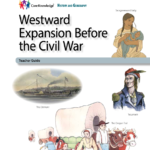
The unit explores the westward movement of Americans in the nineteenth century: the early explorers, effects of new developments in transportation, Native American resistance to settlers, and the treaties broken by government officials. Across 10 lessons, students explore the use of Manifest Destiny to promote the acquisition of US territory, the annexation of Texas, the Oregon Trail, and the California gold rush.
The 19th Amendment and the Road to Universal Suffrage
In this activity, students will explore the struggle for universal suffrage long after both men and women constitutionally had the right to vote. Following a progressive timeline, primary sources highlight voting problems that arose for minority groups throughout the 20th century. Students will answer questions as they work through the documents to reflect on if and when universal suffrage was ultimately achieved.
Native Americans: Cultures and Conflicts (CKHG Unit)
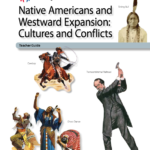
Across 7 lessons, this unit explores the ways of life of diverse Native American peoples and how their cultures were disrupted, displaced, and profoundly altered by westward expansion and American government policies and practices in the 1800s. Some of the content of this unit is tied to the “Pathway to Citizenship,” an array of civics-focused knowledge, questions, and activities.
The American Revolution (CKHG Unit)
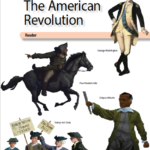
This unit begins by providing background information on the establishment of the thirteen colonies. Across 25 lessons, students learn about early alliances, the French and Indian War, and causes and provocations of the American Revolution. Students are introduced to major ideas in the Declaration of Independence and to key figures in the Revolution, as well as art and literature representative of the period.
Includes 25 lessons of roughly 45 minutes each.
An Independent Judiciary: Cherokee Nation v. Georgia and Cooper v. Aaron
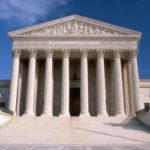
This documentary explores the Supreme Court cases Cherokee Nation v. Georgia (1831) and Cooper v. Aaron (1958) that defined our understanding of the role of the judiciary. In Cherokee Nation, the Supreme Court ruled it lacked the jurisdiction to review the claims of an Indian nation in the U.S. In Cooper v. Aaron, the Court affirmed that its interpretation of the Constitution was the “supreme law of the land” and that states were bound by its decisions. A PDF lesson guide is provided.
The Bill of Rights: Debating the Amendments
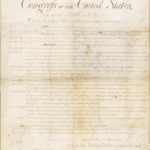
In this lesson, students will examine a copy of twelve possible amendments to the United States Constitution as originally sent to the states for their ratification in September of 1789. Students will debate and vote on which of these amendments they would ratify and compare their resulting “Bill of Rights” to the ten amendments ratified by ten states that have since been known by this name.