African American History Month evolved from the birthdays of Abraham Lincoln and Frederick Douglass in the second week of February. Historian and author Dr. Carter G. Woodson framed the concept that became the first Negro History Week in February 1926. It developed into a monthlong commemoration of the struggles and triumphs of the African American community. On this page, learn the stories of Autherine Lucy Foster, the first African American student to attempt to integrate the University of Alabama; Frank M. Johnson, Jr., the federal judge who ruled in the Rosa Parks case; and Linda Brown, the 9-year-old who became the face of children caught in the crossfire of the fight for social change. The Pathways to the Bench video series features profiles of African American federal judges who offer perspectives on their experiences during the Civil Rights era.
“What to the Slave Is the Fourth of July?”
Frederick Douglass earned wide renown as an outspoken and eloquent critic of the institution of slavery. In this speech before a sizeable audience of New York abolitionists, Douglass reminds them that the Fourth of July, though a day of celebration for white Americans, was still a day of mourning for slaves and former slaves like himself, because they were reminded of the unfulfilled promise of equal liberty for all in the Declaration of Independence.
How Did the Constitutional Convention Deal with Slavery?
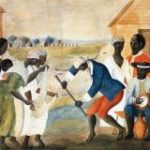
This short video explains the differing perspectives that emerged about the Constitution and slavery. Some, like Frederick Douglass, believed that the Founders put slavery on the road to extinction while others, like Roger Taney, believed that the Constitution was a slaveholders’ document. Professor Gordon Lloyd contends that the slavery clauses in the Constitution both limited and expanded slavery’s impact, and that the Founders alone do not bear responsibility for slavery’s later expansion.
The Seneca Falls Convention and the Declaration of Sentiments
The Seneca Falls Convention, held in Seneca Falls, New York, on July 19 to July 20, 1848, was the first women’s rights convention held in the United States. At that convention, the Declaration of Sentiments was written that outlined demands for women’s equality. This lesson uses video clips to have students understand the important people and events that led to the Declaration of Sentiments and then apply the text of the Declaration to today.
The 19th Amendment: A Woman’s Right to Vote
Voting is the most basic right of a citizen and the most important right in a democracy. When you vote, you are choosing the people who will make the laws. For almost a century and a half of our nation’s history, women were barred from exercising this fundamental right. This film explores the long, difficult struggle for women to win the right to vote. It’s about citizenship, the power of the vote, and why women had to change the Constitution with the 19th Amendment. The film includes primary sources and commentary from historians, legal scholars, and Justices Ruth Bader Ginsburg and Anthony Kennedy.
Documents and Debates in American History and Government – Vol. 2, 1865-2009
The Core Documents Collection – Documents and Debates is structured around a series of topics, each based on a question for debate. For each topic, there is a collection of documents that, together, form the basis of argument over that topic – from those who debated it at a given point in American history. Volume One covers 1865-2009.
The goal is to explore a series of critical moments in American history by asking questions for which there are not simple yes/no answers, but instead call for informed discussion and rational debate. The Documents and Debates readers also include appendices of additional documents, and together are a perfect fit for any American History survey course, including AP U.S. History.
Documents and Debates in American History and Government – Vol. 1, 1493-1865
The Core Documents Collection – Documents and Debates is structured around a series of topics, each based on a question for debate. For each topic, there is a collection of documents that, together, form the basis of argument over that topic – from those who debated it at a given point in American history. Volume One covers 1493-1865, and Volume Two covers 1865-2009.
The goal is to explore a series of critical moments in American history by asking questions for which there are not simple yes/no answers, but instead call for informed discussion and rational debate. The Documents and Debates readers also include appendices of additional documents, and together are a perfect fit for any American History survey course, including AP U.S. History.
The Civil War (CKHG Unit)
This unit explores the political, historical and cultural causes and consequences before, during and after the Civil War, one of our nation’s greatest crises. Across 24 lessons, students engage with the material through primary sources and consider the influence of abolitionists and other intellectual as well as military and political figures.
This unit includes 24 lessons that are about 45 minutes each.
American Reformers (CKHG Unit)
This unit (the second part of Early Presidents and Social Reformers) focuses on the efforts to improve American society in the early 1800s. Across 6 lessons, students learn about the temperance movement, free public education, the abolitionists’ crusade to abolish slavery, and the early women’s rights movement. The unit explores early reformers’ legacy in ongoing modern-day struggles for equality and civil rights.