Utilizing primary source documents from the archives of Presidents Truman, Eisenhower, Kennedy, Nixon, and Reagan, this piece of curriculum is modeled after the Advanced Placement Document Based Questions. This question invites students to explore U.S. Cold War foreign policy through the lens the office of the presidency, and to develop crucial critical thinking and writing skills.
Structures, Powers, and Functions of Congress
Teachers can assign the materials in this lesson as homework or use them to create stations in their classroom in which students can understand how the House of Representatives and Senate differ in their structures, powers, rules, and functions. After students have gone through the lesson, teachers can assign one of two practice exercises to assess how much they understood from their lesson.
Major Events of the Cold War
In this lesson, students will use short video clips to learn about major events occurring during the Cold War, the causes of these events, and their impact on the U.S., Soviet Union, and the world. Students will summarize this information by providing a written response that analyzes the legacy of the Cold War.
Map of the Lewis and Clark Expedition
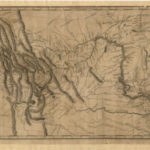
This map of the western part of the Lewis and Clark Expedition was drawn by Samuel Lewis (no relation to Meriwether) using drawings supplied by William Clark.
From Provocative to Productive: Teaching Controversial Topics
Get first steps for creating a respectful yet vibrant environment for students to explore diverse ideas on controversial topics, from politics to profanity, religion to racism. Four guidelines and a debate leader checklist provide a foundation for those seeking to steer productive conversations about controversial subjects.
Constitution of the United States
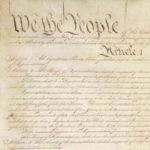
The original U.S. Constitution is on permanent display at the National Archives in Washington, DC. Drafted in 1787 after a hard-won victory in the War for Independence, this document codified the spirit of the Revolution into an ingenious practical scheme of government to promote the welfare of all its citizens.
Teaching Six Big Ideas in the Constitution
This lesson engages students in a study of the Constitution to learn the significance of “Six Big Ideas” contained in it. Students analyze the text of the Constitution in a variety of ways, examine primary sources to identify their relationship to its central ideas, and debate the core constitutional principles as they relate to today’s political issues. (Duration: 45-minute segments, up to 4.5 hours.)
Documents of Freedom: History, Government, and Economics Through Primary Sources
This complete online textbook covers American history, government, and economic concepts. Resources include readings for students, activity directions for teachers, and handouts that are downloadable and printable for classroom use. Content is geared toward students in grades 8-12. All materials are aligned with Common Core and individual state standards.
Making Civics Real
A multimedia workshop for high school civics teachers. It includes 8, 1-hour video programs, a print guide to the workshop activities, and a website. The goal of this workshop is to give teachers new resources and ideas to reinvigorate civic education. The series presents authentic teachers in diverse school settings modeling a variety of teaching techniques and best practices in a variety of social studies courses from a 9th-grade government/civics/econ course, to a 12th-grade law course
Dealing With Controversial Issues/Social Studies in Action Library
This program examines how social studies teachers in any grade level can encourage open and informed discussions with their students while dealing with controversial issues. Topics range from stereotypes and gender–based discrimination to the conflict in the Middle East. Through clearly identifying issues, listening to multiple perspectives, and formulating personal positions, teachers explore strategies that can be used to teach challenging issues such as these in their own classrooms.