
Students will compare the preamble of the U.S. Constitution with the preambles from two state constitutions. They will extract common themes from the three, and note key differences. The preamble to the Constitution has not been changed since its drafting; the Constitution, however, has been amended. Students will reevaluate the ideals expressed in the Preamble and consider their relevance today. They are given the chance to rewrite the Preamble, share their rationale, and explain the values contained expressed inside.
The Constitution: Drafting a More Perfect Union
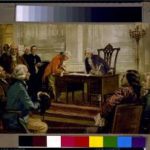
Students will analyze an unidentified historical document and draw conclusions about what this document was for, who created it, and why. After the document is identified as George Washington’s annotated copy of the Committee of Style’s draft constitution, students will compare its text to that of an earlier draft by the Committee of Detail to understand its evolution.
Constitution Primary Source Set
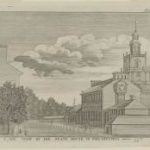
Newspaper articles, notes, and original documents trace the process of drafting and adopting the Constitution and Bill of Rights. Speeches and song lyrics show how later generations used and interpreted the original ideals of the United States
Drafting the Nation
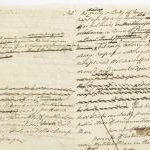
As the Framers drafted different versions of our founding documents, their ideas of what it meant to be a republic also changed. In this unit, four lessons based on the drafts of the Articles of Confederation, Declaration of Independence, and the Constitution, held at the collection at HSP, allow students to explore the language and ideas behind these pivotal documents
Constitution of the United States
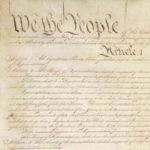
The original U.S. Constitution is on permanent display at the National Archives in Washington, DC. Drafted in 1787 after a hard-won victory in the War for Independence, this document codified the spirit of the Revolution into an ingenious practical scheme of government to promote the welfare of all its citizens.
Founding Documents: Articles of Confederation Podcast
While a famous committee of five drafted the Declaration of Independence, a far more unsung committee of thirteen wrote America’s first rulebook. The Articles of Confederation was our first constitution, and it lasted nine years. If you prefer Typee to Moby Dick, Blood Simple to A Serious Man, or Picasso’s Blue Period over Neoclassicism, you just might like the Articles of Confederation.
The fable of its weaknesses, strengths, rise, and downfall are told to us by Danielle Allen, Linda Monk, Joel Collins, and Lindsey Stevens.
This short episode includes a one-page Graphic Organizer for students to take notes on while listening, as well as discussion questions on the back side.
Impeachment Proceedings
The process of impeachment was outlined in the Constitution when it was drafted in 1787. To date, 19 officials, including judges, cabinet members, senators, and presidents, have been impeached and stood trial. The crimes these individuals have been charged with range from perjury to conspiracy to intoxication on the bench. It is important to note that impeachment is not the actual removal from office, but merely the process to remove an official.
Freedom of Speech
In this lesson, students examine the historical context and the drafting of the First Amendment by examining the motivations of the founding generation. Students will also examine various types of “speech,” such as symbolic speech, hate speech, and political speech, to address the scope of protections promised by the First Amendment and learn that speech can only be limited when it is intended to and likely to cause imminent violence. In each instance, students will explore when the government has some authority to restrict speech; areas of consensus among scholars, judges, and citizens; the strongest constitutional arguments on each side of contested issues; and U.S. Supreme Court cases that have addressed free speech rights.