When the stories of We the People become cases before the U.S. Supreme Court, and when those cases result in the opinions of the Court, history turns. The ways we think about and live under the Constitution are reflected in the Court’s interpretations in both their historical contexts and their legacies. Some cases — and the Court’s opinions in them — so profoundly alter our constitutional understandings that they can only rightly be called Landmark Cases, markers of where we have traveled as a nation. In this way, the Landmark Cases show us what we have tried, where we have been, and where we are — leaving We the People and future sessions of the Supreme Court to determine how we move forward toward a more perfect union.
Freedom of Religion: Free Exercise Clause
Students will examine the protections enshrined in the First Amendment’s Free Exercise Clause. Students will use the Interactive Constitution to examine the Free Exercise Clause’s text and history and how the Supreme Court has interpreted it over time. In this lesson, students compare and contrast the questions, opinions, and dissents in a series of Supreme Court cases to define when the Free Exercise Clause does and does not limit government action.
A Famous Kansas Child
In this lesson, students will read about a Kansas child involved in a famous United States Supreme Court case. They will think critically to form opinions about equality, segregation, and integration, and will distinguish between fact and opinion.
The Origin, Nature and Importance of the Supreme Court
Chief Justice John G. Roberts Jr. and high school students discuss the Supreme Court: its history and traditions, how it selects and decides cases, and the role of an independent judiciary. A lesson guide accompanies the video.
The Nature of Dissent in the Supreme Court
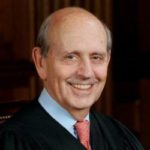
Justice Stephen G. Breyer talks with high school students about the role and importance of dissenting opinions when the Supreme Court decides cases.
Participate in the Judicial Process – Rule of Law
Review the facts, rulings, majority and minority opinions, and reasoning of these two landmark Fourteenth Amendment Supreme Court cases – Batson v. Kentucky and J.E.B. v. Alabama.
Seeking Facts to Solve Mysteries
In this lesson, students will discuss the difference between fact and opinion. They will role play a mock trial, decide the case, and justify their decision. Students will discuss why facts are more reliable than opinions, and understand why courts rely more upon facts than opinions.
Freedom of Assembly: The Right to Protest
This lesson will focus on freedom of assembly, as found in the First Amendment. Students will consider the importance of the right to assemble and protest by analyzing cases where First Amendment rights were in question. Using the case National Socialist Party of America v. Village of Skokie, students will consider if the government is ever allowed to control the ability to express ideas in public because viewpoints are controversial, offensive, or painful. Students will use primary sources and Supreme Court cases to consider whether the courts made the correct decision in the National Socialist Party v. Skokie case. Students will be able to form an opinion on the essential question: Is the government ever justified to restrict the freedom to assemble?
Interactive Constitution: Eighth Amendment (High School)
This lesson introduces students to different viewpoints and debates surrounding the 8th Amendment by using the National Constitution Center’s Interactive Constitution. Students will build understanding of the resources and methods used by justices on the Supreme Court and Constitutional scholars when analyzing and forming opinions about articles, sections, and clauses of the Constitution
Interactive Constitution: Eighth Amendment (Middle Level)
This lesson introduces students to different viewpoints and debates surrounding the 8th Amendment by using the National Constitution Center’s Interactive Constitution. Students will build understanding of the resources and methods used by justices on the Supreme Court and Constitutional scholars when analyzing and forming opinions about articles, sections, and clauses of the Constitution.