Do federal drug laws exceed the Commerce Clause when applied to intrastate possession of medical marijuana, authorized by state law? This case summary shows how the Supreme Court answered that question in 2005.
Dept. of Health and Human Services v. Florida—The Health Care Case (2012)
Does the individual mandate of the Affordable Care Act exceed the constitutional power of the federal government to regulate commerce? This case summary shows how the Supreme Court answered that question in 2012.
U.S. v. Morrison (2000)
Does Congress have the authority to enact the Violence Against Women Act under either the Commerce Clause or Fourteenth Amendment? This case summary shows how the Supreme Court answered this question in 2000.
U.S. v. Lopez (1995)
Did Congress have the power to pass the Gun Free School Zones Act? After a 12th-grade student was arrested under the act, he and his lawyers challenged the constitutionality of the law.
The Pursuit of Justice
The Pursuit of Justice book, written by Kermit L. Hall and John J. Patrick, analyzes 30 Supreme Court cases chosen by a group of Supreme Court justices and leading civics educators as the most important for American citizens to understand. An additional 100 significant cases included in state history and civics standards are summarized. The complete book or individuals chapters can be downloaded.
Weights and Measures
In this lesson, students will come to understand why having common weights and measures, imposed and enforced by the government, is important in day-to-day life. They will discuss how weights and measures permeate the sciences, industry, and commerce, discovering the importance of such standards in their own lives. In the process, students will identify concepts underlying the need for weights and measures, such as private property and fair treatment under the law.
NHD Breaking Barriers: Americans and Native Americans
From the colonial era, relations between European settlers and Native American nations have been complicated. In 1803 Congress authorized and funded an expedition led by Meriwether Lewis and William Clark for exploration of the region and for better knowledge about American Indians of the Northwest in order to develop trade. About 30 years later, the United States forced the removal of Native Americans from their lands to make way for white American settlement. Congress and the president made treaties with Native American nations, but those treaties were not always respected as the United States continued to expand into the west. After Native Americans enlisted and served in both World War I and World War II, Congress passed legislation to begin to address longstanding Native Americans claims against the United States Government.
Act III: How Did the Constitutional Convention Work Out the Details of Government?
This short video examines the role played by the Committee on Detail in defining the powers of Congress, the most important of which were the power to tax and the power to regulate commerce. The Committee wanted to promote an interstate commercial republic and specified congressional powers to achieve that goal. According to Professor Gordon Lloyd, the inclusion of the “necessary and proper clause” was the most significant contribution of this Committee.
The YLI E-Congress Legislative Simulation
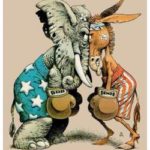
Looking for an interactive way to teach about the legislative branch? The Youth Leadership Initiative’s E-Congress program allows students to learn about Congress by writing original legislation and following it through the lawmaking process. Registration is required.
McCulloch v. Maryland (1819) Middle School Level
Did Congress have the authority under the Constitution to commission a national bank? If so, did the state of Maryland have the authority to tax a branch of the national bank operating within its borders? High school level also available.
This case summary provides teachers with everything they need to teach about McCulloch v. Maryland (1819). It contains background information in the form of summaries and important vocabulary at three different reading levels, as well a review of relevant legal concepts, diagram of how the case moved through the court system, and summary of the decision. This resource also includes seven classroom-ready activities that teach about the case using interactive methods.