
The lesson opens with reflective questions that ask students to consider their knowledge of famous Supreme Court cases and rulings, the issues that the Court addressed last term and the last term’s impact, and potential issues that the Court may address during this term. Students then watch, analyze, and respond to an introductory video in which Supreme Court Justice Stephen Breyer talks about the process that the Supreme Court uses to select cases each term. Next, students engage in an activity where they choose to study three cases that will be argued in front of the Supreme Court during this term. Students will conduct additional self-guided research as needed to determine each case’s petitioner(s) and respondent(s), key issue(s), expected outcome, facts of the case, and question(s) before the court, presenting their findings to the class.
Getting Started with Civil Discourse
This unit provides lesson plans to help teachers cultivate respectful and constructive discussions among students in the classroom, promoting critical thinking, empathy, and effective communication skills.
Heroes of Progress
This unit focuses on the remarkable historical figures who have embodied human progress and innovation throughout world history. Students will delve into the lives and achievements of influential individuals, exploring their contributions in areas such as science, art, and social reform, cultivating a deep appreciation for the transformative power of individuals in shaping our world.
Economics
This unit aims to cultivate critical thinking skills in students as they explore microeconomics and macroeconomics, examining the role of government in the economy through lessons that encourage analysis, evaluation, and understanding of economic principles and government interventions.
Foundations of Civics and Economics
This unit on civics fosters critical thinking skills in students as they engage with topics in government, democracy, and U.S. history, providing comprehensive lesson plans that encourage deep analysis, evaluation, and reflection on the principles and dynamics of civic life.
Article V and the 27 Amendments – Module 15 of Constitution 101
With the Constitution, the Founding generation created the greatest charter of freedom in the history of the world. However, the Founding generation did not believe that it had a monopoly on constitutional wisdom. Therefore, the founders set out a formal amendment process that allowed later generations to revise our nation’s charter and “form a more perfect Union.” They wrote this process into Article V of the Constitution. Over time, the American people have used this amendment process to transform the Constitution by adding a Bill of Rights, abolishing slavery, promising freedom and equality, and extending the right to vote to women and African Americans. All told, we have ratified 27 constitutional amendments across American history. Learning objectives: Describe the reasons that the Founding generation included a formal process for amending the Constitution;
explain how the Constitution’s amendment process works, and why the founders made it so hard to amend the Constitution; identify the key periods of constitutional change in American history and outline factors that drive successful pushes to amend the Constitution; describe all 27 amendments to the U.S. Constitution.
The Constitution EXPLAINED
This comprehensive, short-form video series explains the text, history, and relevance of the United States Constitution, Bill of Rights, and additional amendments. The videos are assignable and end with call-to-action questions, prompting learners to further explore the topics covered in the video through a modern lens. Click on each category to see its related videos, and click on the video thumbnail to watch the full clip. You can also autoplay each category’s videos using YouTube playlists. The series was developed in partnership with the Center for Civic Education, and with the contributions of constitutional scholar Linda R. Monk, JD.
Voting Rights
The right of a citizen to vote is not directly protected in the Constitution, and throughout our history that right has often been granted to some, but denied to others. However, through various amendments to the Constitution, the right to vote has become more and more inclusive. Uncover the battle for voting rights in the National Constitution Center’s learning module.
Constitution Clips
C-SPAN’s Constitution Clips makes the U.S. Constitution come alive by providing teachers and students with video clips from C-SPAN’s Video Library of the Constitution in action.
Constitution of the United States with Index and the Declaration of Independence, Pocket Edition
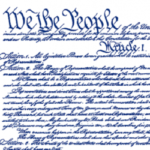
This is the 25th pocket edition of the complete text of two core documents of American democracy, the Constitution of the United States (with amendments) and the Declaration of Independence. The resolution calling for the ratification of Constitutional Convention is also included. A topical index to the Constitution is provided. (House Document 112-29, 2012)